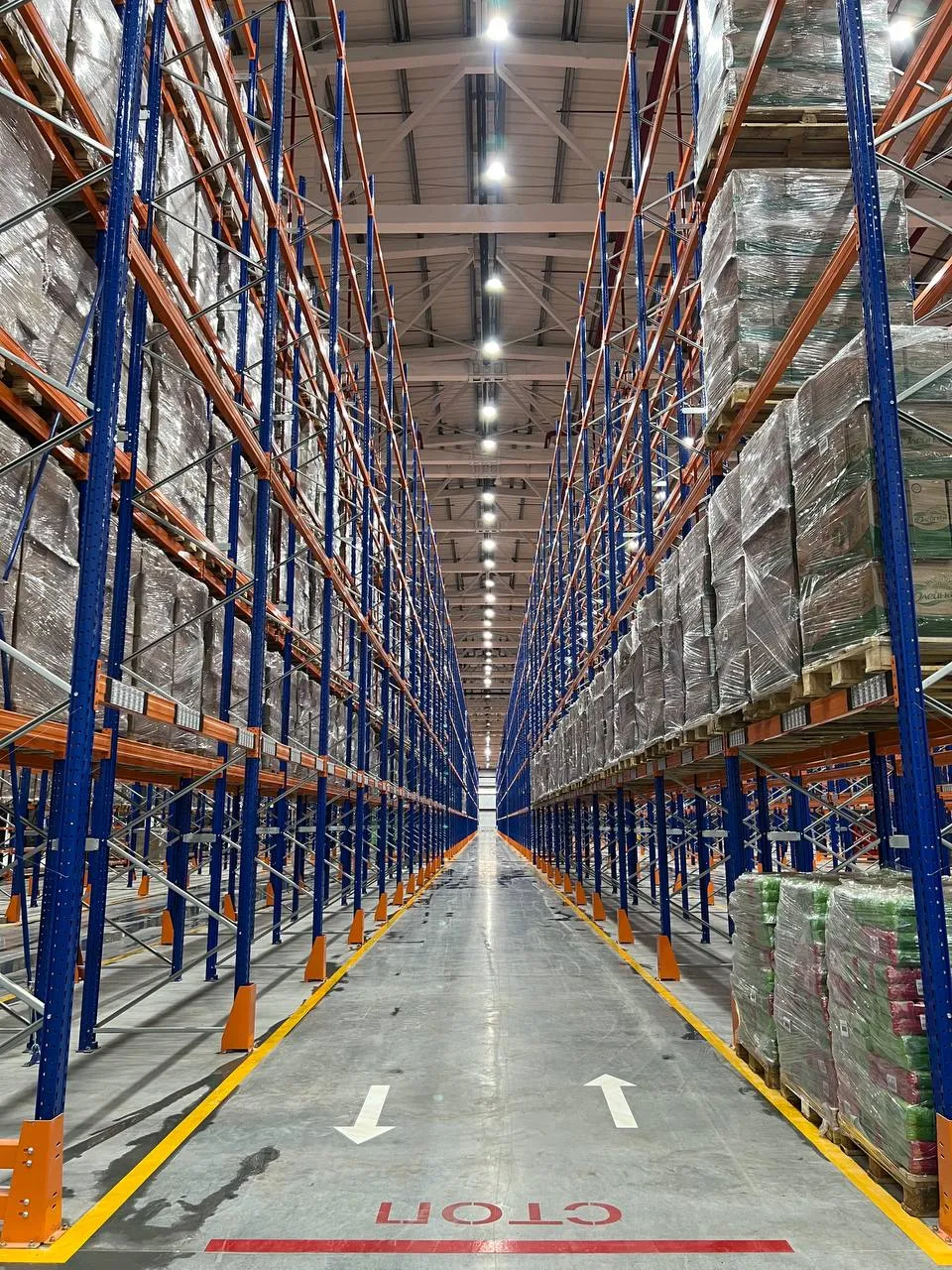
Uzbekistan Has Few Warehouses. Why Are They Needed and How Did the Warehouse Real Estate Market Change Last Year?
The warehouse real estate market in Uzbekistan continued to grow in 2025, but remains uneven: most facilities are located in the capital and its region, while quality properties are extremely scarce in the regions. The country lacks developers who build warehouses for rent, but signs of their emergence are already being observed.
Warehouses are one of the key segments of the real estate market. The prices of goods, as well as the expenses and incomes of producers, farmers, and companies, directly depend on their availability. For example, in 2024, due to difficulties with watermelon exports, a subsequent market surplus, and a collapse in prices, farmers were forced to feed part of their harvest to livestock because there was nowhere to store such a volume of melons. Suitable warehouses would help preserve agricultural crops and maintain low prices for them throughout the year.
"The lack of sufficient warehouse capacity leads to significant price fluctuations in the market due to the inability to balance supply according to demand," explains Danil Marinov, an analyst at the commercial real estate consulting company Commonwealth Partnership Uzbekistan (CMWP).
Research Methodology
In the study, analysts considered only facilities larger than 1,000 sq. m. Warehouses smaller than this area were excluded from the analysis because, firstly, they are not capable of ensuring full-scale shipping, loading, and distribution operations, and secondly, they are often used for personal needs or irregular storage. This does not allow for an accurate assessment of their contribution to professional market turnover, noted Danil Marinov.
The next indicator is compliance with basic warehouse requirements. CMWP classifies these as covered premises with shelving systems allowing for vertical storage. Small and low-quality facilities were not considered in the analysis.
The market assessment only includes full-fledged warehouses and logistics complexes. Random premises such as garages and similar facilities are also classified by analysts as part of the "grey" sector, which is impossible to accurately quantify due to its fragmentation and scale.
According to search queries, in the absence of public official data, the volume of storage space in the market may seem significant. However, most of these facilities do not meet modern professional warehousing standards, according to CMWP.
Professional participants in the warehouse real estate market – developers, investors, and operators, as well as end-users (tenants) – exclude so-called "grey" areas from the actual quality supply and do not consider them for use.
Dynamics and Growth Drivers
In 2025, Uzbekistan's warehouse real estate market continued to grow. According to a CMWP report, the total warehouse area in the country reached 634 thousand sq. m, an increase of 12.6% compared to 2024. This was not only due to the commissioning of new facilities – CMWP updated its own database. Previously unaccounted-for facilities were included, leading to a revision of figures for previous years. For this reason, current data significantly differs from previously published information.
"Our database is a detailed registry of facilities, including key parameters such as region, exact location, area, rental rates, facility class, owner information, project cost, commissioning date, and other characteristics. The database is constantly being refined," said Danil Marinov.
Despite the growth in the total volume of warehouses, the pace of new construction in 2025 significantly slowed down. 71.2 thousand sq. m of warehouse space was commissioned – 46.7% less than in 2024.
Market Geography and Warehouse Types
According to Danil Marinov, the market is developing unevenly. The main share of warehouse infrastructure is located in Tashkent and the Tashkent region, accounting for 72.5% (460 thousand sq. m) of the country's total stock, while other regions represent only 175 thousand sq. m.
"The unevenness is also characterized by a imbalance in the supply structure by warehouse type. Facilities for storing dry cargo predominate, while the segment of specialized warehouses – such as temperature-controlled, freezer, or agro-warehouses – is extremely underdeveloped and represented in minimal volumes," states the expert.
In the regions, there are practically no quality warehouses and logistics complexes.
Warehouse Classification
In terms of supply structure, Uzbekistan's warehouse real estate market remains predominantly of medium quality. Almost half of all warehouse space (49%) consists of Class B and B+ facilities – these are functional, but not the most modern warehouses. The share of Class A and A+ warehouses is 34%.
Class C warehouses are mainly represented by facilities not intended for professional use, so only the highest quality segment is considered in the analysis.
Demand and Market Development Challenges
By the end of 2025, the average rental rate for warehouse space in Uzbekistan decreased by 13.4% to $8.86 per sq. m.
Average rental rate is the averaged rental cost calculated based on market offers and normalized to a single indicator for ease of comparison.
Experts believe that demand for warehouse real estate exists and will continue to grow. In the future, it could increase two to three times, primarily in Tashkent, which remains the largest consumer of warehouse space in the country.
Analysts identify the market's unsystematic nature as a key problem. Historically, the country has had virtually no classic developers specializing in the construction of warehouse facilities for subsequent lease. The main volume of space was and continues to be created by retailers or logistics operators for their own needs, as in the case of the "Korzinka" supermarket chain. However, recently, a trend towards the emergence of the first professional players focused specifically on the rental model has been observed.
Suppliers need a point of sale for products to stores, so the lack of accessible and modern warehouse capacity creates serious logistical and operational difficulties for suppliers and retailers. This systemic problem, among other factors, can become critical for businesses, which, according to experts, has also influenced the situation with the retailer Magnum to some extent.
"Having a distribution warehouse terminal would allow the company to minimize costs and risks associated with cargo delays at the border," believes Danil Marinov.
The analyst points out that solving such an infrastructure task independently often requires significant capital investment, which can be prohibitive for an individual, especially a small, player. In this context, systemic development, i.e., market development by professional builders offering ready-made spaces for rent, could be an effective solution.
New Formats and Market Future
According to CMWP analysis, projects involving the subsequent lease of warehouse space, as well as logistics parks with long-term leases, are still not fully formed. However, in 2025, the first signs of structural changes began to appear.
The emergence of multi-stage projects oriented towards a professional format of warehouse and logistics infrastructure indicates a possible transition from scattered self-construction to a more organized development market.
In addition, projects in the built-to-suit format, where a developer builds a facility specifically for a client, fully considering their unique requirements for layout, functionality, and equipment, are entering the market, including in the regions. The built-to-lease model – the construction of warehouses specifically for rent – is gradually taking shape.
Although Uzbekistan's warehouse real estate market is still in its early stages of development, the results of the past year lay the foundation for further changes. The growth of quality supply, government support measures, including subsidies and special economic zones, as well as the increasing presence of international companies, are creating demand for more modern and professional warehouse solutions. CMWP Uzbekistan notes that the combination of these factors could lead to the emergence of new professional developers – domestic and international – and the gradual formation of a full-fledged warehouse rental market.
Source: Gazeta.uz
Photo: Orifjon Khoshimov / "Gazeta.uz"