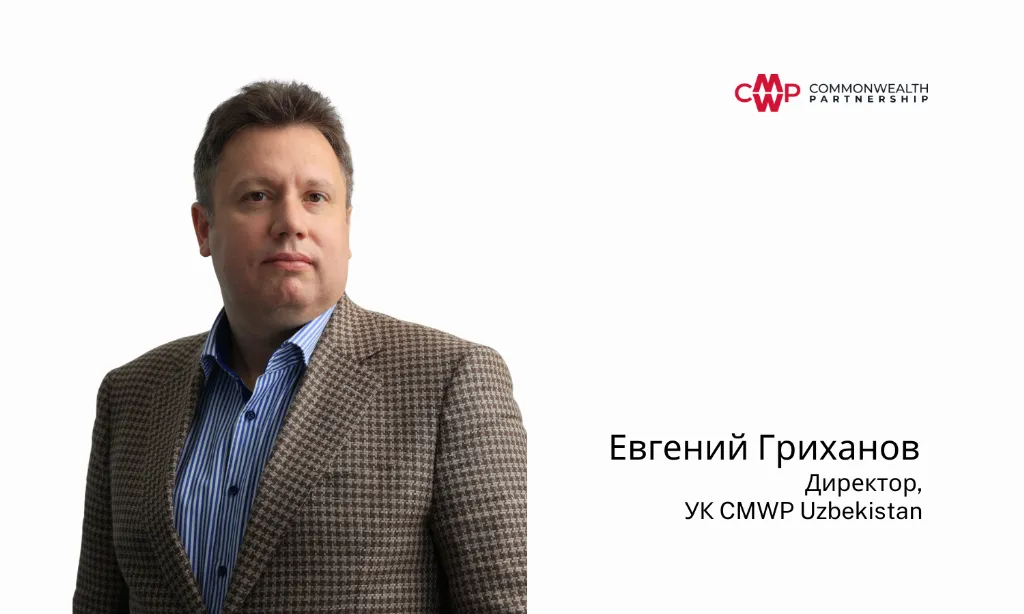
At the Hospitality Investment Forum 2026, Denis Sokolov, CEO of CMWP Uzbekistan, presented a report titled Investing in the Future of Uzbekistan: From New Tashkent to Transformational Projects.
Denis's presentation focused on Uzbekistan's investment opportunities and the specifics of operating in a developing real estate market. In a frontier market, where the institutional environment, financing mechanisms, and market practices are still evolving, evaluating investment projects requires an understanding of local nuances. Simply transplanting models from mature markets is ineffective.
The hospitality industry perfectly illustrates this situation. Tourist demand is growing: in 2025, Uzbekistan welcomed 11.7 million foreign tourists. However, the supply of quality accommodation remains limited. According to CMWP data, as of July 2026, the country had 202,600 accommodation places across 7,440 facilities, with 6,509 rooms in international brand hotels.
The combination of growing demand and developing supply defines the investment prospects of the hospitality market, which is evolving in various directions:
- Recreational Tourism: The Chimgan cluster and Sea Breeze Uzbekistan are the most ambitious examples of leisure infrastructure development, catering to both domestic and international demand.
- Historical Tourism: Samarkand, Bukhara, and Khiva are attracting investments in hotels and tourism infrastructure. Notable projects include Silk Road Samarkand, the Bukhara tourist center, and new hotels in Khiva.
- Business and Event Tourism: Congress infrastructure and international-standard hotels are creating conditions for hosting international events and developing business tourism.
These are the most prominent examples of a broader geographical spread of tourism investments, encompassing various regions of the country.
New Tashkent offers a different perspective: the creation of a city from scratch as part of the capital's expansion. Mixed-use development creates opportunities for hotel, residential, and commercial projects. According to published data for New Tashkent, 474 out of 3,582 plots are designated for hotel functions. It is crucial to evaluate the project's independent economic viability rather than relying solely on the development of adjacent areas.
What should investors consider in such a market?
- Assess the Stage and Timing of Entry: Different segments go through their own investment cycles; overall growth does not mean all areas are equally ready for investment.
- Verify Not Only the Asset but Also the Implementation Environment: This includes local partners, decision-making structures, property documentation, regulatory procedures, and the team's actual capabilities.
- Factor in Market Volatility: Demand, infrastructure, and regulations can change significantly during project preparation and execution.
- Understand Capital and Regional Context: The source of funding affects implementation timelines and mechanisms, and economic drivers and demand exist beyond Tashkent.
Even with their own investment, legal, and technical teams, international investors require local expertise, especially when conducting HBU (Highest and Best Use), due diligence, and feasibility studies, assessing asset potential, limitations, market environment, and project economics.