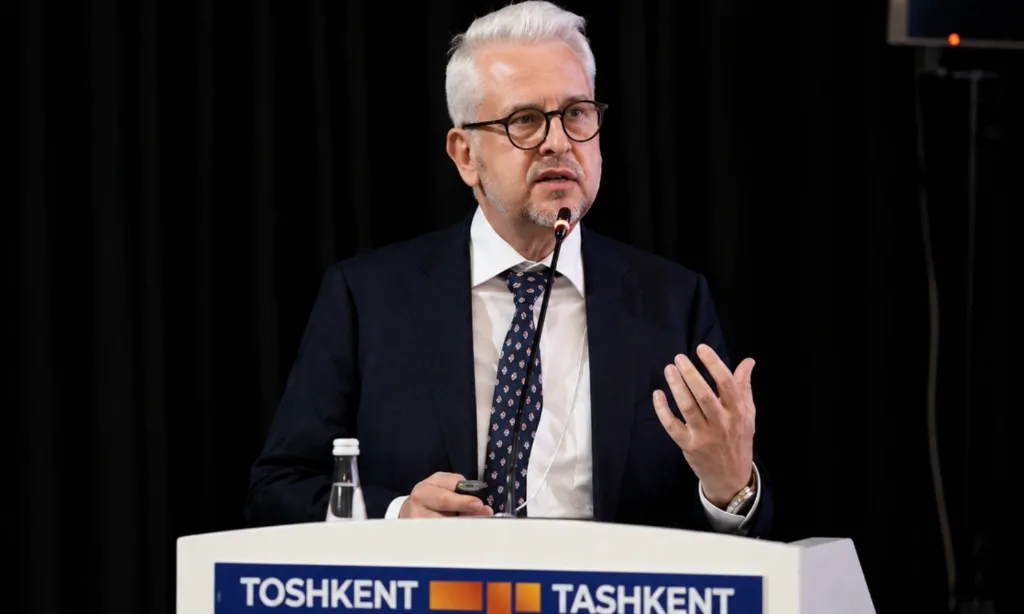
Denis Sokolov, CEO of Commonwealth Partnership, discusses in a column for Spot what the capital of Uzbekistan will be like in 5-10 years and what factors will influence the real estate market development.
Professional consultants start any project with future scenarios. This applies even to private tasks, such as organizing traffic at an intersection, creating a public space, or constructing an office building. The approach to solving a problem depends on how many cars will pass through the intersection in 10 years, what the educational background of public space visitors will be, and which companies will rent offices.
All urban challenges have a long-term effect and cannot be solved without a vision of the future.
Forecasts and scenarios are of two types: probabilistic and desired future forecasts. The latter, which describe the future we want to see, are more common in business publications. When you read an interview with a minister stating that their department expects to achieve certain indicators by a specific year, it is a desired future forecast. It only indicates the goals the ministry has and where it is heading. As Steve Jobs said, "Be realistic, demand the impossible." It's not hard to guess that Jobs himself operated with desired future forecasts.
What about probabilistic forecasts? These can be found in internal company reports, analytical publications from investment banks, major consulting firms, and international business media like the FT or Bloomberg.
High-quality forecasting involves not only using big data and complex models; first and foremost, it is crucial to develop a school of thought and infrastructure. In other words, only a forecast that can be adjusted and where expected intermediate parameters can be compared with actual ones is good. Every identified discrepancy in a forecast allows for model improvement.
Future Scenarios for Tashkent
As a baseline, we consider a scenario of economic liberalization and accelerated urbanization. Trends of recent years suggest that by 2030, Tashkent's population will exceed 3 million, and by 2035, it will reach 3.5 million people. The expected natural population growth will be 1.5-2% per year, with a net migration inflow of 30-50 thousand people.
After that, growth rates will slow down as the country faces a demographic transition characterized by increased life expectancy and declining birth rates.
Education is the main challenge with such accelerated population growth and migration. Moscow, facing a similar problem in the early 2000s, attracted primarily highly educated and energetic individuals from regional cities. This led to a "brain drain" from the regions and caused development imbalances for the next 10 years.
Tashkent is currently experiencing a boom in educational services, which is excellent. However, we must consider China's experience, where an "education bubble" created an unbearable burden on households that spent their last money to provide their children with educational advantages, forcing the government to intervene and implement strict regulation in this sector. Migration potential from Russia, Belarus, and Ukraine in this regard can be seen as an opportunity to improve the skills of the workforce for the urban economy.
The transition to a post-industrial economy requires a large number of jobs, including in the service sector. This creates a risk of "lumpenization": the formation of a layer of low-skilled workers with no opportunities for development. While in Europe, a courier or sales assistant job is a career step for many young people, for developing countries, these activities can become career dead ends.
This is where foreign companies play a key role, acting as social elevators. Companies like McDonalds or Starbucks invest heavily in their staff development because only by ensuring employee growth can they expect diligent work. One might think that little knowledge is needed to make coffee, yet such companies rigorously screen candidates, and coffee shop or restaurant managers are recruited from those who were previously behind the counter.
The war in Ukraine has significantly impacted the position of international businesses operating in the consumer market. While two years ago, companies aggressively sought new markets and top managers who could offer expansion strategies were hailed as heroes, today risk managers are in charge. This is not solely due to the Russian experience; in China, consumer sector companies also face reputational issues and aggressive pressure from consumers and regulators.
This is why we are adjusting our forecasts regarding the expansion of global business into Uzbekistan. Previously, we anticipated seeing real activity in the consumer market as early as 2023, but now the consumer revolution is postponed to 2024-2025. During this period, 2-3 new brands will enter the republic monthly.
We expect retail sales turnover to grow by 20% annually in the near future, then by the 2030s, growth will slow to 10-12%. By 2035, retail sales per capita will increase 8 times, reaching approximately 160 million soums per year. Combined with population growth, this signifies a more than tenfold increase in the capital's retail market.
The main problem is inequality, which will persist until a middle class is formed. Much depends on government policy. The "New Uzbekistan" program generally sets a course for middle-class formation. We believe that by 2035, the middle class share in Tashkent should reach 25%. However, this is insufficient for the city's sustainable development.
How the Real Estate Market Will Change
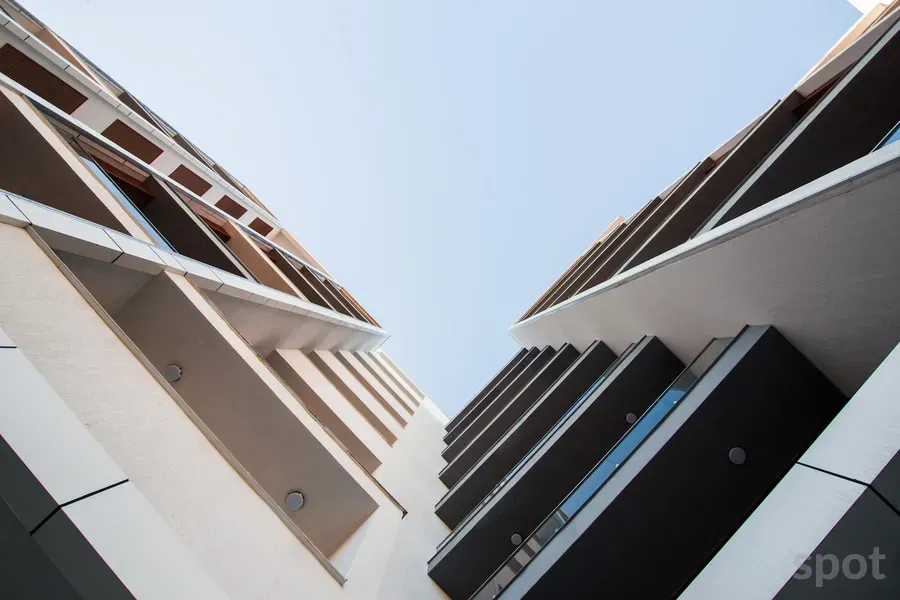
The housing market has been developing rapidly in recent years. Citizens are concerned about rising prices, yet the market itself is still in its very early stages of development. At this stage, an apartment is viewed by buyers as "my home is my castle," rather than as a financial instrument, investment asset, or lifestyle choice.
In large cities, an apartment is not a place to sleep but a ticket to the human capital factory, which is the modern city. Yes, people are forced to pay three to four times more for housing in London than, for example, in the Scottish countryside. However, in London, they gain access to education, career opportunities, and social connections that are impossible in the provinces.
Housing developers have long been considering these demands, offering a product that best meets buyer requirements, even those that the buyer may not yet be aware of, as they live within a familiar paradigm.
The goal is to increase the price per square meter for the developer on one hand, and minimize the total cost of ownership for the buyer on the other. This is why new formats like serviced apartments (a real estate format that includes full furnishing and appliances - Spot note), student housing, studios, and coliving spaces (a type of affordable housing where like-minded people live together - note), and multifunctional complexes are emerging.
In recent months, a number of developers from Russia have begun to consider Tashkent as a new market. We estimate the demand potential for Tashkent to be 1.5-2 million sq.m. of housing per year.
However, without mortgage development, it is unlikely to expect accelerated market growth. Therefore, the main question is whether mass mortgage lending can be launched in 2023-2024. This brings the issue of interest rates and loan currency to the forefront.
International banks, wary of currency volatility in Turkey, Russia, and Kazakhstan, are unwilling to finance mass foreign currency mortgages due to devaluation risks. Therefore, the primary task is to reduce rates in local currency. We believe that it will take about three years to develop mortgage lending. In the meantime, individual developers will increasingly offer installment plans for housing sales.
In terms of prices, we expect relative stability in 2023 and accelerated growth by 2025. Overall, in currency terms, we believe housing has approximately a twofold growth potential over a 10-year horizon.
We typically adjust forecasts and scenarios twice a year, and it is these adjustments that allow us to assess how dynamically the market is developing and what new business opportunities are emerging.
Source: Spot.uz
Photo: Radmir Khabibulin / Spot