Tashkent's public catering market is growing dynamically, fueling demand for street retail commercial spaces and quality areas in shopping centers. Cafes, restaurants, and new-format food markets are opening across the city, offering residents and visitors fresh culinary experiences. Let's explore how the food service sector impacts the urban economy, which districts are most attractive for eateries, and what prospects lie ahead for investors.
All Roads Lead to Chorsu
Tashkent is not only the cultural and economic heart of the country but also a major gastronomic trendsetter in Central Asia. The city's culinary landscape boasts a rich diversity of dishes and cuisines from peoples who have inhabited the region for centuries.
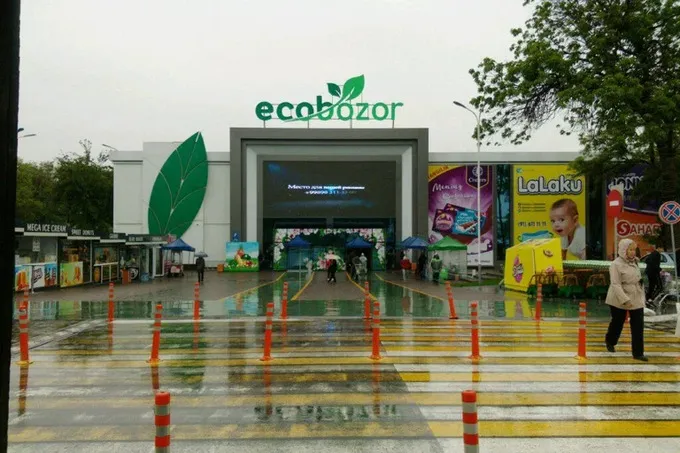
Our gastronomic journey through Tashkent begins at Chorsu Bazaar, a place beloved by locals and tourists alike. Over two millennia ago, it was the city's center, with all roads leading to it. Trade at Chorsu was conducted not only by locals but also by Indians and Chinese, who sold a variety of goods, from silk and pearls to spices and medicines. For centuries, it has attracted merchants and culinary artisans from across the region, offering a wide array of local products and goods.
Today, Chorsu remains a symbol of local and regional street gastronomy, renowned for its diverse stalls of authentic food (the so-called "Obzhornye Ryady" or "Glutton's Rows"), spices, and produce, continuing the traditions and the cultural and culinary heritage of the people of Uzbekistan.
A Taste at Every Step
In Tashkent, all public catering establishments, from traditional canteens (Uzbek: Milliy taomlar) to trendy restaurants catering to discerning clientele, are located in street retail spaces on the ground floors of residential and administrative buildings.
As the city developed and expanded, several areas emerged with a high concentration of street retail. In these commercial zones, a significant portion of the premises is allocated to food service establishments.
In our assessment, such locations in Tashkent include Taras Shevchenko Street, currently undergoing extensive reconstruction, Amir Timur Avenue, Shota Rustaveli and Shakhrizabz Streets, and of course, two major districts: Ts-1 and its modern counterpart, Tashkent City.
Having studied these streets and districts, our team found that, on average, about a third of the available spaces are dedicated to food service establishments of various formats, offering options for both takeaway meals and full dining experiences with family and friends.
According to CMWP analysts' estimates, the distribution of public catering outlets within the retail areas of Tashkent is as follows:
- Taras Shevchenko: 33%
- Amir Timur: 15%
- Shota Rustaveli: 22%
- Shakhrizabz: 30%
- Ts-1: 20%
- Tashkent City: 16% (retail zone in the Boulevard residential complex)
Trends and Traditions
Modern formats and establishments, including those serving national cuisine, are not displacing traditional tea houses and Milliy taomlar. These venues remain an integral part of the daily lives of Uzbekistan's residents.
These symbols of national culture and hospitality are deeply ingrained in the public consciousness and lifestyle of the people, creating a unique authentic atmosphere that attracts foreign tourists.
However, even this format of establishment is evolving, offering more comfortable conditions while retaining its primary function: to quickly and affordably feed guests with traditional national dishes.
Genius Loci
The choice of location for a restaurant or cafe plays a crucial role, even more so than the concept itself. It determines 51% of the establishment's success. Tourists, passersby, and city residents are far more likely to visit a restaurant if it is located in a high-traffic area rather than on the outskirts.
In Tashkent, we are already seeing examples of recently opened establishments closing, partly due to incorrect location choices where traffic is simply absent, and competition forces increased marketing expenses.
For instance, based on the Moscow food service market, it's proven that an establishment located on the second floor of a building automatically cuts off 50% of potential traffic. Therefore, almost all restaurant concepts and project owners request ground-floor premises for maximum comfort and accessibility for visitors.
New Faces, New Formats
Two to three years ago, the number and variety of concepts were quite limited, despite the large number of establishments. This situation has rapidly changed.
The market is now witnessing a trend of stable and high-quality openings of new establishments and concepts, driven by both local market players and international projects and franchises.
Among the notable openings of 2024, the entry of international concepts into Tashkent's food service market includes: Costa Coffee, Cinnabon, CZN Burak Burger, EVA, Gunaydin, Morelli’s Gelato, and Yann Couvreur, among many others.
It is also worth noting the active interest and market entry of successful projects by Russian restaurateurs such as Arkady Novikov, Alexander Orlov, and others.
Major openings include the Georgian restaurant TKX, the Belgian brasserie-style restaurant Lambic, YUZHANIN – a restaurant with Caucasian cuisine, live music, and vibrant parties, Pro.Khinkali, June cafe (formerly Dizengof/99), Kaspiyka, DYUT', and others.
This trend indicates that Tashkent's food service market is highly promising for international expansion by foreign restaurant chains and groups, demonstrating positive consumption dynamics driven by a growing population.
Ceilings and Terraces
When entering Tashkent's food service market, foreign players tend to establish themselves in new residential developments or quality business centers on the ground floors, featuring large storefronts, the potential for spacious verandas, and technical specifications that allow for the creation of the necessary level of comfort for visitors and staff operations.
The development of the food industry in the city increases demand for street retail spaces, especially in high-traffic and visible locations. New international brands and franchises intensify competition, driving up demand for quality retail spaces.
In response, local developers are beginning to create projects that meet these requirements, including convenient layouts, high ceilings, and spacious summer terraces. Gastronomic quarter projects are emerging.
This trend is pushing the market towards diversification and a variety of offered formats. This is how food halls and gastronomic clusters are born. An example of such a cluster is Food Mall Tashkent, which houses approximately 25 different gastronomic concept corners across 2,000 square meters, representing cuisines from around the world.
Thus, the growth of the food industry not only increases demand for quality real estate but also transforms the urban retail market itself, creating new business opportunities and influencing architectural and urban planning decisions.
On Shevchenko Street
The most striking example of this transformation is the reconstruction of a section of Taras Shevchenko Street in Tashkent, which is planned to become a gastronomic hub due to its high concentration of cafes and restaurants, one of the highest in the capital.
On one hand, this creates temporary inconveniences not only for residents of the area and the city but also for establishment owners, temporarily reducing foot traffic and revenue by 2-3 times.
However, on the other hand, these temporary inconveniences can pay off in the near future. The modernization of street infrastructure, the organization of parking areas, and the creation of convenient cycling and pedestrian routes make the street more attractive to citizens, increasing foot traffic and drawing more visitors to local cafes and shops.
In the future, such reconstructions can enhance the prestige of an entire district, increase local business revenues, and contribute to job creation.
Choosing the right location and understanding market specifics are key success factors for implementing a successful project. However, it is always important to stay abreast of trends and adapt to rapidly changing conditions, remaining relevant and meeting new consumer needs. In a dynamic market, this will allow not only to maintain competitiveness but also to actively develop the business, transforming it into a network of projects offering new experiences to consumers.
Source: Kursiv