Summary: What Happened in the Uzbekistan Real Estate Market and What to Expect in 2026
Spot, in collaboration with CMWP Head Denis Sokolov, reviews the changes in the real estate market, price fluctuations for housing, offices, and warehouses, and forecasts prices for the upcoming year.
Spot continues its year-end review. Denis Sokolov, General Director of CMWP Uzbekistan, discusses the outgoing year in real estate, observed changes, and expectations for 2026. CMWP analysts also provide an analysis of the residential, retail, office, and warehouse property markets.
Residential Real Estate
According to the Central Bank, over the first nine months (three quarters of 2025), the number of transactions reached 229.8 thousand, showing a year-on-year growth of 12.8%. In the cities of the Fergana Valley, growth was 7-8%, while in the cities of the Tashkent region, it was only 1.7%.
Prices in the primary market for apartment buildings increased by 2.4% in soums and by 5.5% in dollars. In the secondary market, prices rose by 1.8% in soums and by 5% in dollars.
The residential rental market also saw increased activity in Q3. Against the backdrop of seasonal demand growth in August-September, rental rate growth accelerated. In Tashkent, the annual growth in rental prices in dollar terms in September was 5.4%, and across the republic, it was 8.4%.
According to the Center for Economic Research and Reforms, by the end of the year, housing price growth in Uzbekistan slowed down. In the secondary market, nationwide growth was 7% compared to the previous year; in Tashkent, prices even decreased by 0.9%. However, new buildings in the capital appreciated by an average of 4%, and in some districts, by up to 9%.
According to CMWP estimates, by the end of 2025, 2.17 million sq.m. of housing was built in Tashkent (including phased construction), which is 288 thousand sq.m. (+16%) more than in 2024. Since 2019, the maximum number of transactions will be recorded – over 85 thousand.
The main volume of new apartment introductions was in the Economy, Comfort, and Comfort+ classes (85% of the market) – 1.79 million sq.m. of living space, reflecting a focus on mass housing. Approximately 327 thousand sq.m. were introduced in the business class, compared to over 472 thousand sq.m. in 2024. The introduction is shifting towards large, multi-stage projects. No new premium projects were launched in 2025, but construction continues on six residential complexes, including Mirabad Square, Stellar Residence, and Agalarov Residence.
According to CMWP data, prices increased across all classes: Economy/Comfort – by 5%, Business – by 8%, Premium – by 9%. The average discount per sq.m. is about 10% (+3% compared to last year).
Price ranges (averaged):
- Premium – from $2.8 thousand to $3.3 thousand per sq.m.
- Business – from $1.8 thousand to $2.2 thousand per sq.m.
- Economy/Comfort – from $1 thousand to $1.1 thousand per sq.m.
The strengthening of the soum in 2025 influenced the increase in dollar-denominated prices. CMWP experts view the combination of strengthening and discounts as an actual decrease in cost for buyers, especially in the economy/comfort segment.
The market has stabilized, and developers are selling off accumulated non-liquid inventory through discounts. This is seen as a healthy consolidation before the introduction of project financing and escrow in 2026.
Offices
The total volume of the Tashkent office market at the end of the year was 754,429 sq.m. of gross building area (GBA). Of this, 591,217 sq.m. is leasable area (GLA) – spaces that can actually be leased. Over the year, the GLA volume increased by 54,635 sq.m., or 10.2%. This growth was driven by the introduction of new office properties to the market.
Approximately 54 thousand sq.m. were introduced in 2025 (about 60% less than in 2024). Vacancy stood at 94.8 thousand sq.m., approximately 16% at the end of 2025, compared to 25% a year earlier (-9%).
Rental rates (net, excluding OpEx, VAT, and utilities) were:
- Class A/A+ — $34.6 per sq.m. (in 2024 – $34.3)
- Class B/B+ — $27.3 per sq.m. (in 2024 – $24.1)
On average, rental rates in the office market increased by 7.1% compared to the previous year.
According to CMWP analysts, the office real estate market is in a stabilization phase. The growth in rates is primarily due to a decrease in vacancy levels and a revision of rental expectations by owners. Offices with ready finishes, located in central business districts, are in highest demand, while unfinished spaces are leased significantly slower.
Retail Spaces
As of the end of 2025, the volume of quality retail space in Tashkent was 514 thousand sq.m. of leasable area (GLA). CMWP analysts revised the composition of the quality stock and excluded some properties that did not meet the basic requirements of a modern shopping center. As a result, the list of quality shopping centers includes 24 properties, including Tashkent City Mall, Atlas, Next, and Mega Planet.
In 2025, over 100 thousand sq.m. of new retail space entered the market. Among key projects, CMWP notes the partially opened Scopus Mall, as well as High Town Mall, Yunusabad Gallery, and Park In Mall. However, not all introduced properties fully meet the requirements of international retailers. The number of new international brands entering the market in 2025 was lower than the previous year.
Market saturation with quality retail space is estimated at approximately 165 sq.m. per 1,000 residents. For comparison, in major cities of the post-Soviet space, a saturated level is considered to be 450-500 sq.m. per 1,000 residents.
Rental rates in shopping centers in 2025 remained at the previous year's level and range from $15-70 per sq.m. per month, excluding VAT and operating expenses. Vacancy is 18%.
According to CMWP analysts, the concept, positioning, tenant mix, architectural and engineering solutions, and management are critical for project quality – these factors influence tenants' decisions to enter a project.
Warehouses
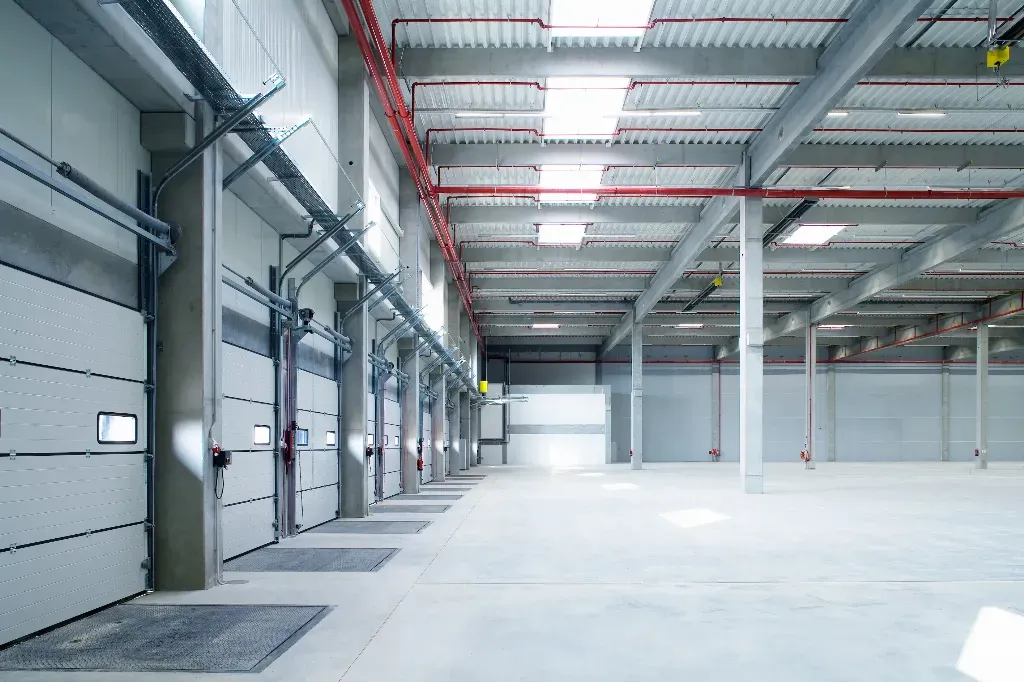
By the end of 2025, the warehouse real estate market volume was 634 thousand sq.m. The main part of the warehouse infrastructure is concentrated in Tashkent and the Tashkent region – 460 thousand sq.m., or 72.5% of the total volume, while regions account for about 175 thousand sq.m. The formal market growth of 12.6% compared to 2024 is partly due to the updating of the database and clarification of the object composition.
The introduction of new warehouse space in 2025 was 71.2 thousand sq.m., which is 46.7% lower than the previous year's figure. However, CMWP analysts note a significant number of announced projects, including the Silk Way PTC and DP World complexes.
The average rental rate in the warehouse market by the end of 2025 was $8.86 per sq.m., which is 13.4% lower than the previous year. The supply structure is dominated by Class B and B+ warehouses, accounting for 49% of the stock (excluding BTS projects).
According to CMWP analysts, the warehouse real estate market is still largely focused on building facilities for operators' own needs. Nevertheless, structural changes began to emerge in 2025: large professional projects entered the market, the classic built-to-suit format is developing, and prerequisites for transitioning to a built-to-lease model are forming.
The commercial real estate market in Uzbekistan in 2025 did not develop as dynamically as other sectors, nor the economy as a whole. However, despite the absence of striking figures, structural changes have emerged in the market that will allow it to reach a new level in the coming years and compete with more developed markets.
Today, even developed global markets face challenges previously characteristic only of emerging markets: political instability, international tensions, high interest rates, social problems – businesses from Warsaw to New York are currently facing all of this. Against the backdrop of problems in their domestic markets, large global investors are looking more cautiously at emerging markets and are becoming less tolerant of risks.
This means that Uzbekistan needs to reformat its approach by creating an investment product associated with minimal risks and predictable returns.
Regulation and Events of the Year
In the outgoing year, the government of Uzbekistan definitively set a course for creating a transparent and predictable market. In the first stage of market formation (2019-2024), the main task was to create a business environment for economic activity, even at the cost of a number of compromises.
Now, the task is to ensure compliance with regulations, tax payments, and improvements in quality and efficiency. This is a complex and painful process, but thanks to it, I hope that the vicious practices of construction without permits, with violations, and selling "air" will become a thing of the past.
Today, we see a formed demand for quality office and retail spaces. Unfortunately, supply still lags behind demand.
Developers do not yet understand that for businesses, the priority is the technical parameters of the premises and simple, effective communication with the owner. No "gold" in the elevator will help if the owner cannot agree on lease terms within a month.
The situation is similar with retail spaces. According to our company's data, no more than 10 major retail brands entered the market in 2025. This small number is due to the lack of quality retail premises with predictable foot traffic and professional management in the market.
Currently, a paradoxical situation is developing where retail companies come to Uzbekistan with the aim of opening stores but postpone their decisions for a year or two due to the lack of quality offerings. This harms businesses, the economy, and consumers.
Projects of the Year
In Tashkent, by the end of 2025 – early 2026, a full-fledged market for Class A offices is emerging. Buildings such as Bomi, Summit, and Infinity are forming a new segment. Of course, it will take some time for companies to learn effective office space organization, and for agents and owners to structure lease agreements that consider the interests of all parties and avoid potential problems.
The supply of mid-sized shopping centers and Class B office buildings, targeting local foot traffic and mid-price categories, has also begun to form. Notable examples of such properties include Scopus Mall and the Chust 15 business center.
What will happen next? The introduction of escrow accounts will become a key factor in transforming the market in 2026. It will change the relationships between all participants in the housing development process and may mark the beginning of market consolidation — when large developers will absorb smaller ones. These may be the first signs of the impact of New Tashkent on the real estate market.
Record‑breaking housing indicators are also expected. Companies will rush to implement projects before escrow accounts are introduced. At the same time, a significant volume of Class A office space will enter the market, and a number of new projects will be announced.
At the same time, the shortage of high‑quality warehouse space will persist, while the new supply in the retail real estate market will decrease due to the gradual “washing out” of low‑quality properties.
In 2025, the real estate market effectively completed the phase of extensive development, when properties were built at a high pace without regard to real demand and needs.
In 2026, competition will intensify across all segments, and competition based on quality will begin. The market already understands today that the main criterion for real estate quality is the consumer properties of the property at an adequate price.
Developers, agents, and marketers will focus not on some mythical premium status, but on the specific consumer qualities of the property and their alignment with the price. The main tool for competitive struggle will be an adequate pricing policy and the ability to provide the consumer with the maximum value at a price lower than that of the competitor.
We expect prices to remain relatively stable, but an attempt will be made to create a genuine premium segment in offices and residential properties, which, in terms of product, will differ from competitors, and this segment will try to set a premium benchmark 30% above the market.
Source: Spot.uz
Photo: Ilya Semendeev / Spot