The company anticipates urban growth and highlights the need for action across several areas.
Tashkent has the potential to establish itself as the largest city in Central Asia in the coming years. This is stated in a report by the consulting firm Commonwealth Partnership.
This is facilitated by rapid urbanization and fast population growth. In these conditions, alongside existing business clusters, opportunities are emerging for new peripheral business zones.
According to the company's calculations, by 2035, the capital will have 2.15 million square meters of office real estate, a 460% increase from the current amount. To attract businesses, several tasks need to be addressed.
Residents
As of July 1st, the capital of Uzbekistan had a population of just under 3 million people. If current growth rates are maintained, the population could reach 4 million by 2035 and exceed 5 million by 2050.
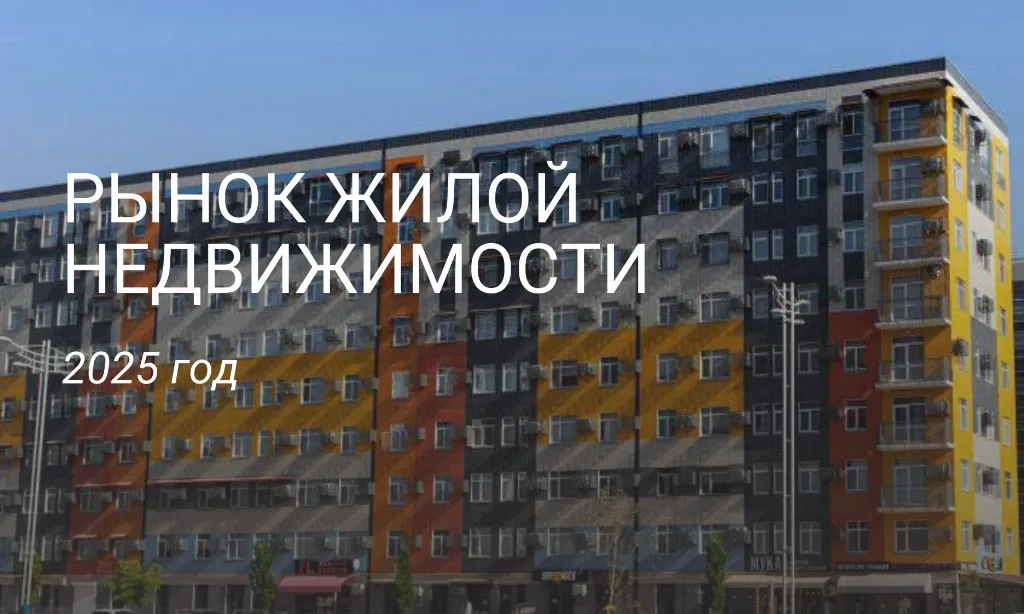
The population density is 68 people per hectare, comparable to other megacities such as London and Hong Kong. The housing provision per capita stands at 22.8 square meters.
The company noted that the average provision rate is significantly influenced by the high proportion of residents living in private households. The increasing prevalence of single-person households affects household size.
The "Tashkent-2030" strategy envisages an increase in housing construction to 44,000 apartments per year, primarily outside the Tashkent Ring Road. Simultaneously, the average apartment size has been decreasing for several years, while quality requirements are increasing.
Analysts predict more active construction of "economy" and "comfort" class housing outside the capital. Since 2020, these categories have accounted for 48% of new square meter completions.
Areas
Individual housing construction occupies 36.3% of the city's area, significantly more than in developed countries. While a quarter of residents live in private homes, over 60% of the population and 12% of the area are accounted for by medium-rise buildings.
Nearly 19% of the city's land is occupied by industrial zones, with a significant portion being used inefficiently. Redevelopment of these areas with a focus on social and business infrastructure will ensure a balanced urban environment.
CMWP anticipates a more pronounced division of the city into two parts: low-rise and high-rise. The construction of "New Tashkent" to the southeast of the current city will shift the center of population density eastward.
On the other hand, "New Tashkent" will alleviate some of the traffic burden on the city center, where 60% of office spaces are currently concentrated. Administrative bodies are also planned to be relocated to its territory, creating up to 200,000 jobs.
However, the key issue remains the demand for areas remote from the main part of the city, as well as the construction of housing to support the business function. Experts urge the publication of development plans for "New Tashkent" for residents and potential investors.
Infrastructure
CMWP considers infrastructure renovation a priority for redevelopment, as its current state poses challenges to the city's growth. In particular, the wear and tear of utility infrastructure and its inadequate maintenance are noted.
Foreign companies (SUEZ, Veolia) are involved in addressing engineering communication issues. However, regulatory complexities hinder the conclusion of new concessions.
Experts also highlighted the increase in the number of cars; over the past 4 years, their number has grown by a third, and by 2035, it could increase by 120% compared to the present. This could lead to increased traffic congestion, parking shortages, and additional environmental problems.
In global practice, measures such as paid entry into the city center or paid parking, as well as the development of public transport, are used to address this issue. However, the latter requires a set of conditions, including stability and quality of service.
Source: Spot.uz
Photo: Evgeny Sorochin / Spot