Spot, having attended a session with CEO of CMWP Uzbekistan, Denis Sokolov, at the International Tashkent Investment Forum, publishes the expert's key takeaways.
According to Denis Sokolov, the city needs additional business spaces, modern retail areas, and warehouses.
In Tashkent, the housing market is developing faster than commercial real estate, creating a market imbalance. This was stated by Denis Sokolov, General Director of Commonwealth Partnership Uzbekistan, at the ITIF-2026.
According to him, Tashkent has experienced a construction boom in recent years, peaking in 2022. At that time, the volume of construction in one year increased by 77% compared to the existing real estate stock. He considers the current slowdown in construction pace a normal stage after active growth.
The next task, according to the expert, is to bring the market into balance. Currently, residential real estate predominates in the structure of new construction. The ratio between residential and commercial functions depends on the type of city, but typically the commercial component accounts for about 15-20%. Currently, the share of commercial space in newly created complexes is significantly lower.
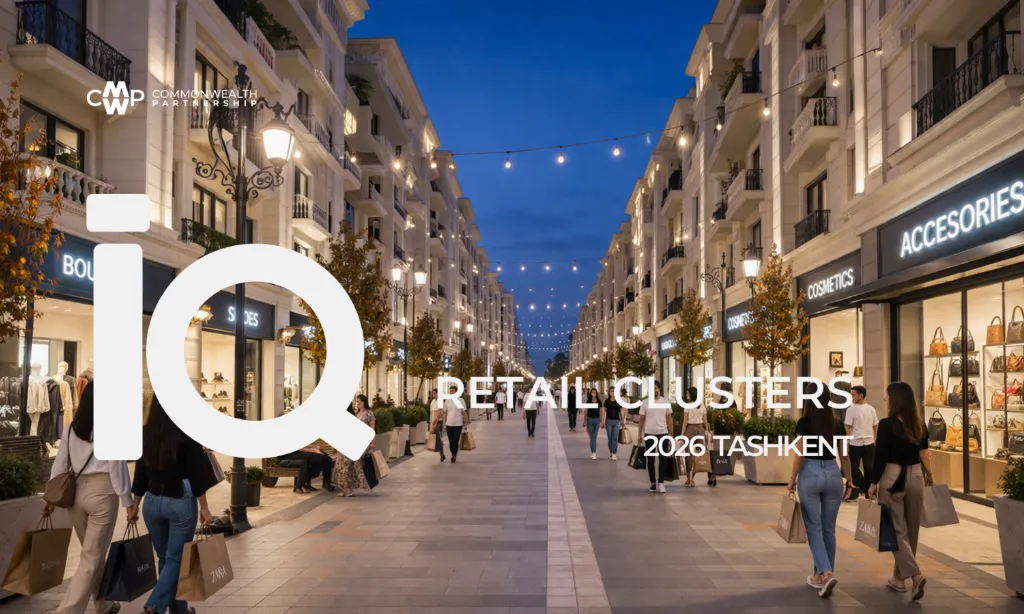
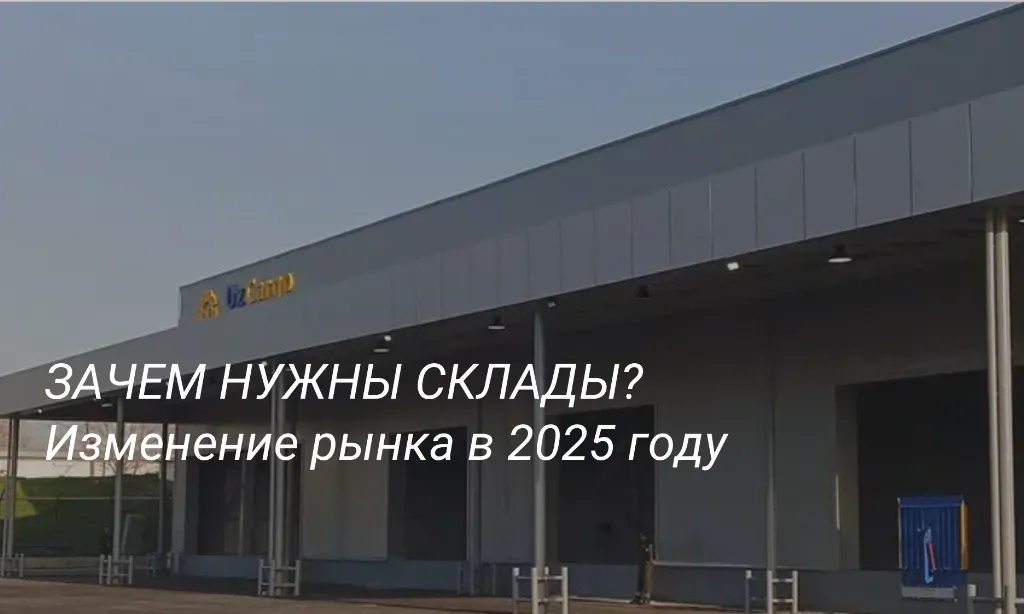
"If we want to see a balanced market in the future, then in addition to the existing pipeline of projects that are already under construction or planned in Tashkent, we critically need: an additional 350 thousand sq. m. of modern office/business spaces, 550 thousand sq. m. of modern retail spaces, and about 600 thousand sq. m. of Class A warehouses," he said.
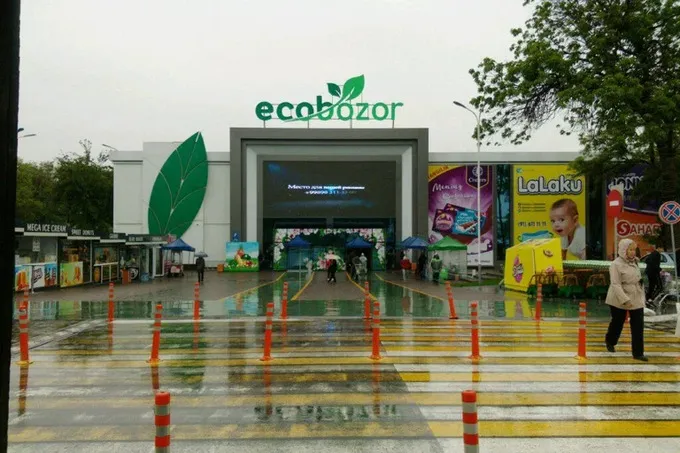
This raises the question: if there is fundamental demand for commercial space, why are developers not building such facilities more actively? According to him, the answer lies in benchmarking. To assess the market, the presentation cited the indicator of retail space provision per 1,000 residents: in Tashkent, it is 184 sq. m. For comparison, in Almaty, the figure reaches 440 sq. m., and in Astana – 570 sq. m. This data indicates the city's need for a larger volume of modern retail space.
However, the existence of demand does not mean that developers will actively build such facilities. Real estate is not an isolated industry; it depends not only on buyer needs but also on how well such projects align with the interests of developers themselves.
To create a high-quality retail facility, according to Sokolov, all key market players must "tick the boxes" – international retailers, major retail chains, marketing agencies, flexible office operators, and other companies. Without them, it will be difficult for a developer to form a suitable environment. Currently, such an ecosystem does not exist in the market.
Among the limitations, the expert also mentioned the lack of transparency in the land market, which hinders the launch of new development projects in the city. Additionally, the sale of commercial spaces in small blocks remains a problem for the market.
"Due to the lack of institutional investment capital, the developer is forced to finance construction directly in the process, selling blocks and floors of a future shopping center to various individuals. As a result, it is physically impossible to create a unified concept of a shopping mall, lifestyle center, or any other facility that creates a quality environment for the city in such a building," he added.
Responding to the moderator's question about market gaps, the expert noted that Tashkent lacks operational businesses – the "glue" that binds projects together. According to him, architectural and construction management expertise can be attracted from abroad, while local operational expertise needs to be developed within the market.
"Tashkent and Uzbekistan are absolutely unique countries. There are a huge number of nuances here. You cannot simply take a working, successful scheme from Europe or even from neighboring Kazakhstan, bring it here, and expect it to work. We see many examples where large retailers from Kazakhstan have failed and closed down in Uzbekistan. This means that we need to cultivate our own, local operational business expertise that can imbue the projects currently under construction or planned with meaning, business, and drive," concluded Sokolov.
Earlier, Spot reported that Tashkent was among the top three fastest-changing cities in the world according to Boston Consulting Group.
Source: Spot.uz
Photo: Press service of the Ministry of Investment, Industry and Trade