Which real estate market segments in Kazakhstan and Uzbekistan are of interest to foreign investors, what returns do they expect, and what do they actually receive?
“If you have more than a few million US dollars, it might be worth negotiating with a developer and buying an entire floor of 10 small apartments. This is good diversification outside the Western world. As a real estate investment, I would prefer to have 10 studio apartments in Kazakhstan than a 20 sq. m studio in Paris,” says international investor and consultant Ladislav Moris, discussing the attractiveness of investing in Kazakh real estate. “If your net worth is less than $2 million and you can only afford to buy a few apartments in Kazakhstan as part of your portfolio, this market probably doesn't make sense.”
Foreign investors view emerging markets, such as Kazakhstan or Uzbekistan, as an opportunity to diversify capital and achieve higher returns by investing in markets "where no one else is going yet." However, investors may encounter administrative barriers, imperfect legislation, and currency risks along this path. As a result, actual returns may not align with expectations.
Investor Limitations and Workarounds
While individual foreign buyers purchase tens of thousands of homes and apartments worth billions of dollars annually in Turkey, the UAE, Thailand, and Europe, real estate markets in Kazakhstan and Uzbekistan are restricted for private foreign investment. For instance, in Uzbekistan, a foreigner as an individual can only acquire a new property costing at least $180,000. In Kazakhstan, a residence permit is required to purchase real estate.
These restrictions are significant for investors with small capital, but for professionals, they are merely a formality. What is not permitted for individuals can be accomplished by a legal entity established by a foreigner. “It is usually easier to set up a company and buy real estate in its name than to apply for a residence permit,” reasons Reed Kirchenbauer, whose team assists investors in building portfolios in "hard-to-reach" countries in the Asian market.
“For example, register a consulting company that will bill for a few hours each year. It's a bit of a gray area, but usually, no one will bother you if you stay small enough. Just buy a few apartments, don't attract attention, and don't be greedy,” suggests another foreign investor-consultant.
Investments with Obstacles
The main difficulties arise for foreign investors when funds have already been invested, and the investment object is still in the development stage. According to experts, problems can be related to the local economy, legal environment, infrastructure, and administrative barriers.
“During the construction of a specific facility, issues related to infrastructure connection may arise. Changes in legislation can lead to additional approvals and revisions in obtaining permits, which increases the implementation period and operational costs,” lists Gulshat Sarieva, Partner, Head of Cushman & Wakefield Kazakhstan Office.
Maxim Nikityuk, Head of Consulting and Valuation Department at Colliers Kazakhstan, also speaks about the risks of insufficient infrastructure, adding currency instability and underdeveloped financial markets to the list of risks.
“The main challenges remain currency fluctuations, especially amid volatile commodity prices. Local financial markets remain underdeveloped, limiting access to capital and creating additional financial risks for foreign investors who rely on international markets,” he says.
In Uzbekistan, according to Denis Sokolov FRICS*, Partner and General Director of Commonwealth Partnership Uzbekistan [CMWP], the primary issue for foreign investors, which significantly complicates calculations and poses an additional risk, is the moratorium on pegging rental rates to an equivalent amount in foreign currency.
The second problem is the low level of trust in the market.
“When purchasing an asset, a costly construction audit and legal audit must be conducted, which are highly likely to reveal problems, but it's not guaranteed that the seller can or will be willing to rectify them. This means the buyer has to incur significant expenses even before entering into the deal,” explains Sokolov.
It is not uncommon for sellers to misrepresent financial figures with the aim of achieving higher returns for themselves.
“We have encountered situations where the owner included improvements that they believed the buyer would make in the price. For example, an asset generates rental income of $1 million, and the owner sells it for $12 million, promising a 16% return, assuming the buyer will invest in renovation and receive $2 million from rent,” provides an example from the CMWP General Director.
Investors from Which Countries Invest in Real Estate in Central Asia
Potential entry points into the markets of both Kazakhstan and Uzbekistan for foreign investors include residential real estate, warehouses, and tourist facilities.
Due to existing restrictions in Kazakhstan, foreign investments are primarily concentrated in large, state-supported projects. Examples include the capital city projects by Arab investors Abu Dhabi Plaza, Americans The St Regis Astana, or Turkish projects Rixos Water World and Town Center in Aktau, and Karavansaray in Turkestan.
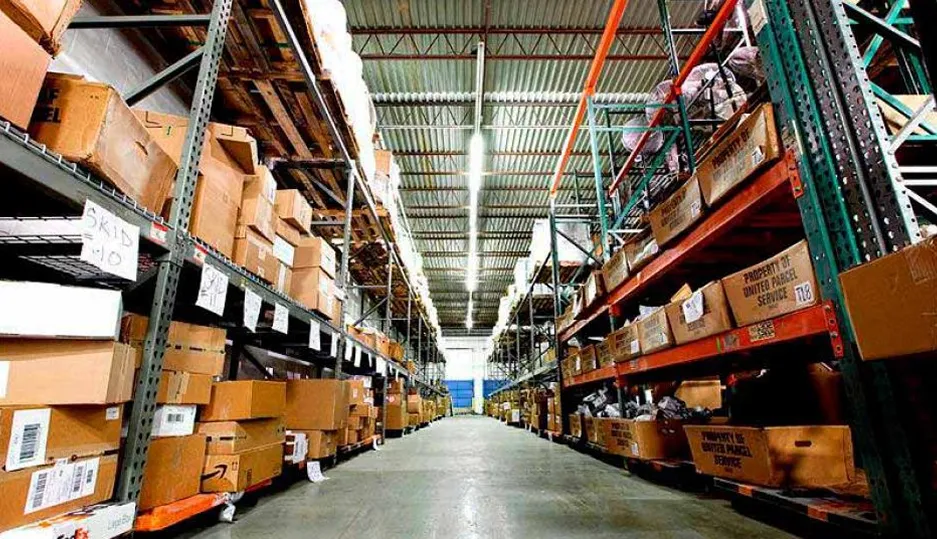
Among foreign investors in Almaty's commercial real estate is the Italian design and construction company Renco. Russian companies Ozon and Wildberries are actively investing in warehouse real estate. There are no institutional foreign investors in Kazakh real estate.
The situation is similar in the Uzbek market. According to the head of CMWP, private investors are the main contributors to development projects. “We see Korean capital in office, hotel, and residential development, Kazakh investments are noticeable in the residential segment, Chinese in residential complex development, Russian in logistics, and so on,” lists the speaker.
“The most active investors are from Russia and the CIS, whose primary goal is to obtain foreign currency returns in a favorable jurisdiction. These investors primarily consider small assets, ranging from apartment pools to commercial real estate portfolios (up to $5 million). Their criteria are expected returns and ease of transaction, so they mainly look at the primary market and are clients of developer sales offices,” explains Denis Sokolov. “Eastern investors, particularly Korean and Chinese, are focused on larger projects in partnership with local businessmen, preferably with state support. State support for projects is a crucial criterion. However, such projects proceed slowly as they require extensive development, and their financial model may not be very straightforward.”
Western investors are the least visible in the Uzbek market. For such investors, real estate is a supplement to their main business (manufacturing, business services, etc.). “It often happens that while a corporate investment project is being developed, foreigners make private investments in real estate or business because they see Uzbekistan's potential,” adds Sokolov.
CMWP attributes the lack of institutional investment in Uzbekistan's real estate to the absence of an investment product: quality buildings with a transparent history and a clear business model.
“The market is just beginning to offer Sale-Leaseback transactions, which will be the first systematic investment deals in the market. This format allows the seller to invest in their core business, and the buyer to receive guaranteed rental income. The property price, rental rate, lease term, and indexation are integral elements of the sale and purchase agreement,” says the speaker.
Returns: Expectations vs. Reality
“An annual return of 18–20% in USD is a figure that can ignite greed in any investor's eyes,” believes Denis Sokolov.
However, the actual returns for development projects in both Kazakhstan and Uzbekistan rarely reach these figures.
According to Gulshat Sarieva's estimates, the highest returns in Kazakhstan today are in the logistics real estate sector (10–12%), as well as office and retail real estate (8–12%). Investments in premium residential properties yield an average of 6–10% annually, and in the secondary market – 4–6%.
“Logistics real estate is particularly attractive due to transit cargo flows and the growth of e-commerce. The volume of such investments ranges from $5–30 million, depending on the scale and location of the properties. Commercial real estate shows above-average returns due to the demand for office and retail space in Almaty and Astana. In the regions, returns can be higher but with greater risks. Investment volumes in commercial real estate are $10–50 million and higher for large facilities in the capitals,” comments the expert.
In Uzbekistan, investments in hotel complexes in cultural and tourist cities (Samarkand, Bukhara, Khiva), according to Sarieva, can yield 10–18% annually with an investment volume of $5–25 million. Commercial real estate, driven by economic growth and demand for office and retail space in Tashkent, provides 10–15% annually (investment volumes of $5–30 million). Residential real estate yields 7–12% annually. In Uzbekistan's residential real estate, with growing demand for quality housing, Cushman & Wakefield Kazakhstan considers premium new developments to be the most promising segment (investment volumes of $1–3 million for individual projects, $5–20 million for large residential complexes).
CMWP's estimates are more modest.
“The local market offers returns no higher than 14%, and that's with optimistic calculations – a thoughtful investor understands that the actual return will be at least 2 percentage points lower,” says Denis Sokolov. “In other countries, high returns on invested capital are achieved through leverage. In Uzbekistan, borrowed funds are very expensive, so one can only count on direct returns.”
Despite the prohibition of rental rates in foreign currency in Uzbekistan, all investors, according to Sokolov, calculate returns in dollars. “This is, to some extent, self-deception. Therefore, foreign investors' return expectations are inflated,” notes the expert.
Those foreign investors who have already "tasted" the real estate markets of Kazakhstan and Uzbekistan agree with the experts' assessments. “No, this market won't make you rich. It's simply diversification with above-average returns,” concludes Ladislav Moris.
* FRICS – Fellow of the Royal Institution of Chartered Surveyors – one of the highest international qualifications in the real estate field.
Source: Kursiv.kz
Photo: Shutterstock/Evgueny