Why is independent municipal budget policy important for a city?
Alexey Letunovsky, head of the analytical group Commonwealth Partnership Uzbekistan, explains how city budgets are formed in Uzbekistan and why this is crucial for urban development.
What do residents typically expect from a city? First and foremost, a comfortable living environment. Fundamentally, this implies developed transport, social, commercial, and utility infrastructure. Everyone needs convenient sidewalks and roads, accessible schools and hospitals, shops and business centers, and uninterrupted gas and electricity supply.
Furthermore, public spaces are essential: parks, squares, and other areas for leisure, relaxation, and social interaction. These places foster a sense of openness and community, allowing people to enjoy nature within the city and participate in various public events.
Cities are shaped by a combination of factors: geography, economy, resources, social dynamics, and political planning. Infrastructure development, transportation, and zoning are key elements of urbanization.
A city's ability to develop is closely linked to its capacity to generate revenue through taxes from companies or residents operating within its territory. The budget, formed based on projected revenues and expenditures, directly influences the city's development.
Analyzing the situation with urban budgets in Uzbekistan, particularly in Tashkent, we observe a limited budget allocated for development programs. In this context, the task of city administrations (khokimiyats) is to seek co-financing opportunities for such programs from both national authorities and private businesses.
The article aims to initiate a discussion on the importance of independent municipal policy for quality urban development.
Next, I will explain how city finances work and why this matters to residents.
Country-Specific Differences in Municipal Policy
The relationship between state and municipal levels of government varies across different countries. Consequently, budget responsibilities at each level differ based on national specifics.
For instance, in Denmark, the state is responsible for healthcare, while in France, it is the municipalities. This means that healthcare expenditures for cities in France are higher than in Denmark.
In Uzbekistan, we observe a classic top-down management approach typical of post-Soviet countries, characterized by a strict hierarchy of municipal responsibilities to regional authorities, and regional to national.
The scope of legally defined municipal responsibilities is limited, which curtails their autonomy. The more obligations a municipality has, the greater its potential to expand the share of taxes contributing to its budget.
Revenue Side of City Budgets in Uzbekistan
The budget reform partially implemented in Uzbekistan in 2021 established clear boundaries for tax and non-tax revenues for local budgets.
According to the Budget Code of the Republic of Uzbekistan, the municipal finance system cannot be considered one based on personal income tax (PIT) collection, as this tax revenue goes to the regional level. Instead, it aligns with systems based on land and property taxes, as municipalities primarily derive their income from these sources. Consequently, municipalities have limited capacity to form their own independent budgets.
An exception is Tashkent, which holds city-region status. However, even Tashkent faces budget limitations with a 5% cap on corporate income tax and PIT (Table 1), which does not aid in forming a surplus budget.
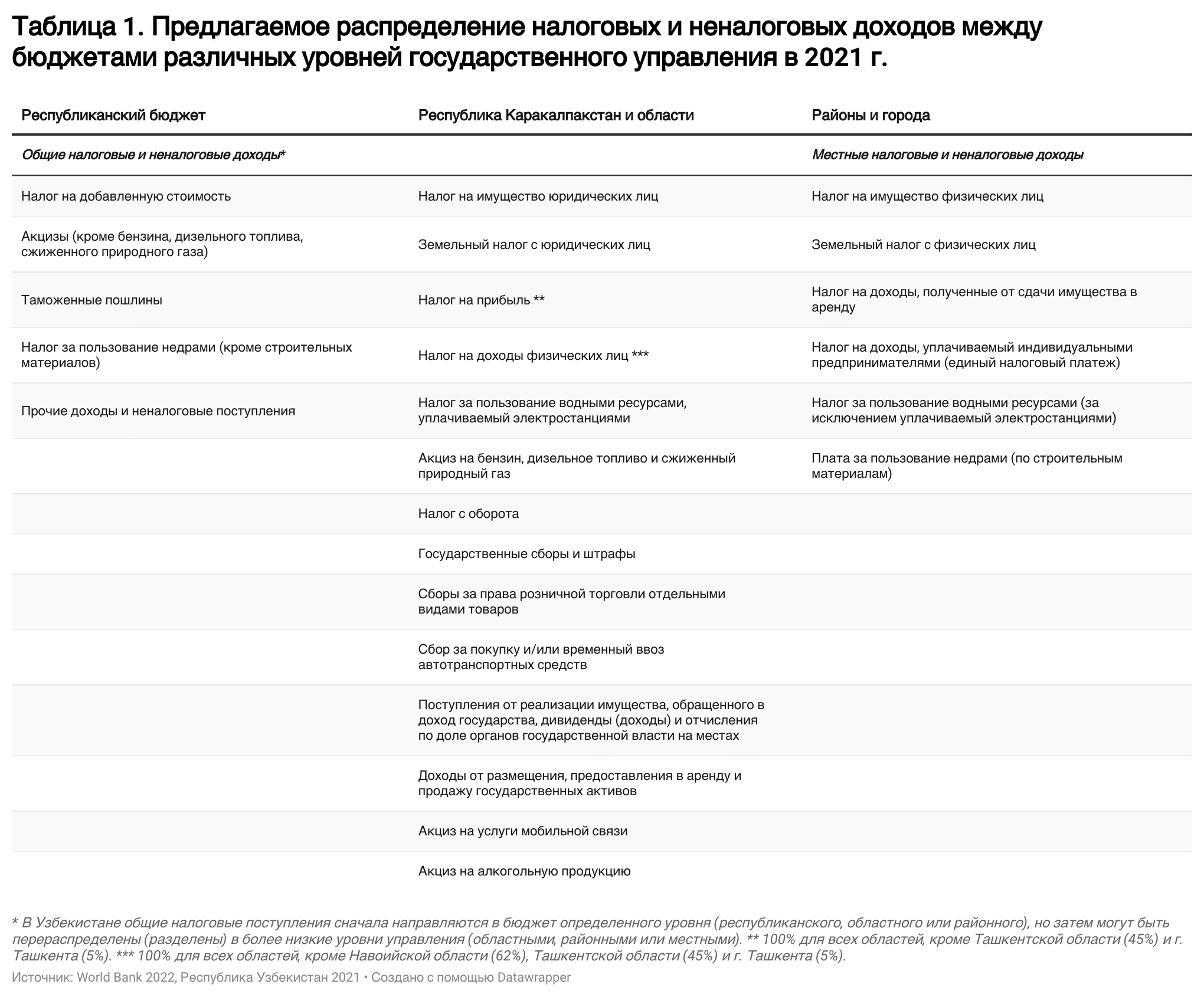
This situation leads the national government to create mechanisms for horizontal revenue equalization among regions through transfers. For 2024, the share of deductions from the national to regional level across Uzbekistan is projected to range from 5% to 40%, depending on the region (Table 2). The share of transfers for the municipal level in 2024 is unknown (it was over 40% in 2022).
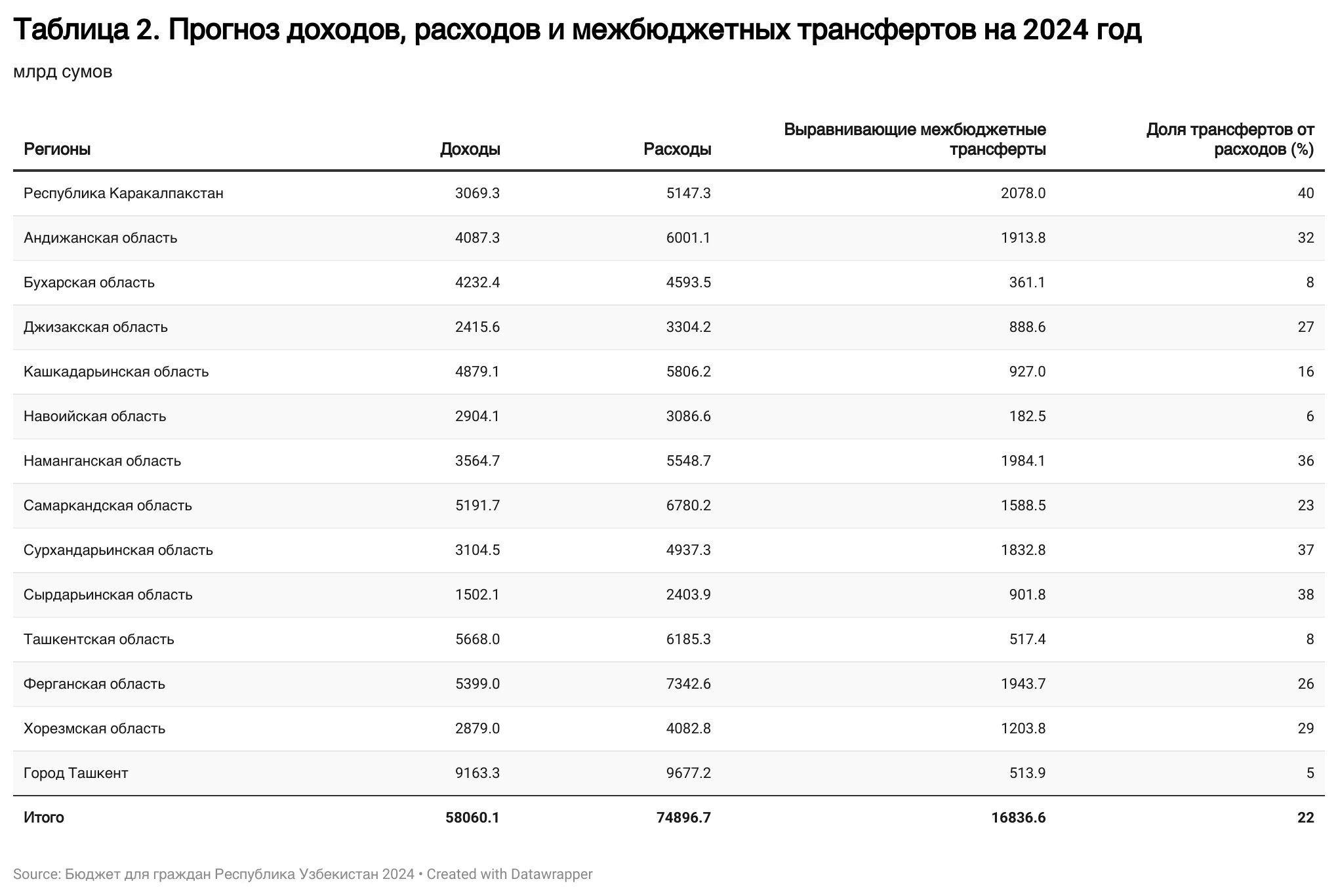
Since 2021, some regions have seen an increase in transfer shares by 10%-15%, attributed to a 1.5-fold increase in budget expenditures, often for social infrastructure.
While this situation is not problematic in the short term, if these trends persist, it could reduce the motivation for regions and municipalities to expand their own tax bases.
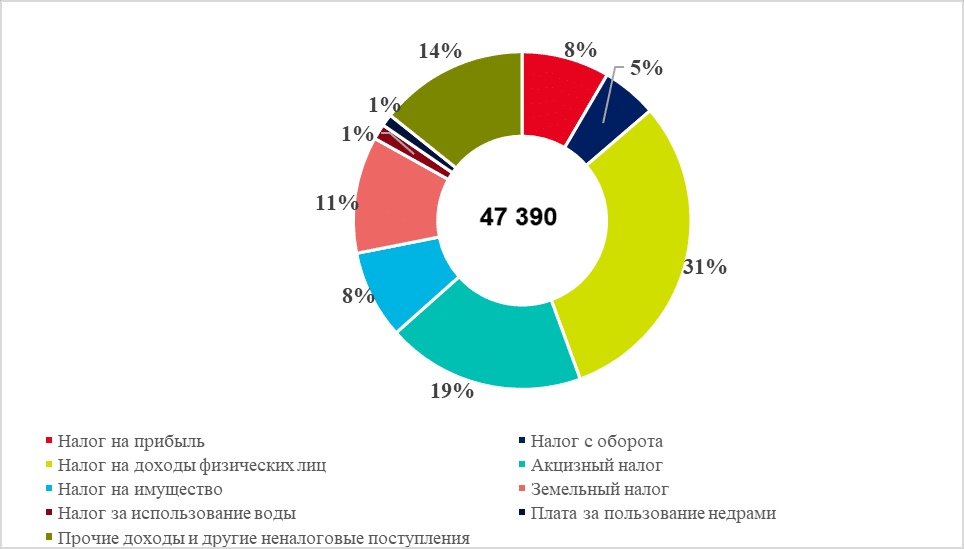
Expenditure Side of City Budgets in Uzbekistan
According to the budget code, the draft budget for local authorities for the upcoming year (short-term) is approved from September to November of the current year. The primary component of local budget expenditures consists of social spending, including social benefits, education, and healthcare (Figure 2).
Unfortunately, since 2022, the open budget for citizens has not published data by expenditure groups, so comparisons will use 2022 data. In 2022, over 40% of city budget expenditures were financed through transfers.
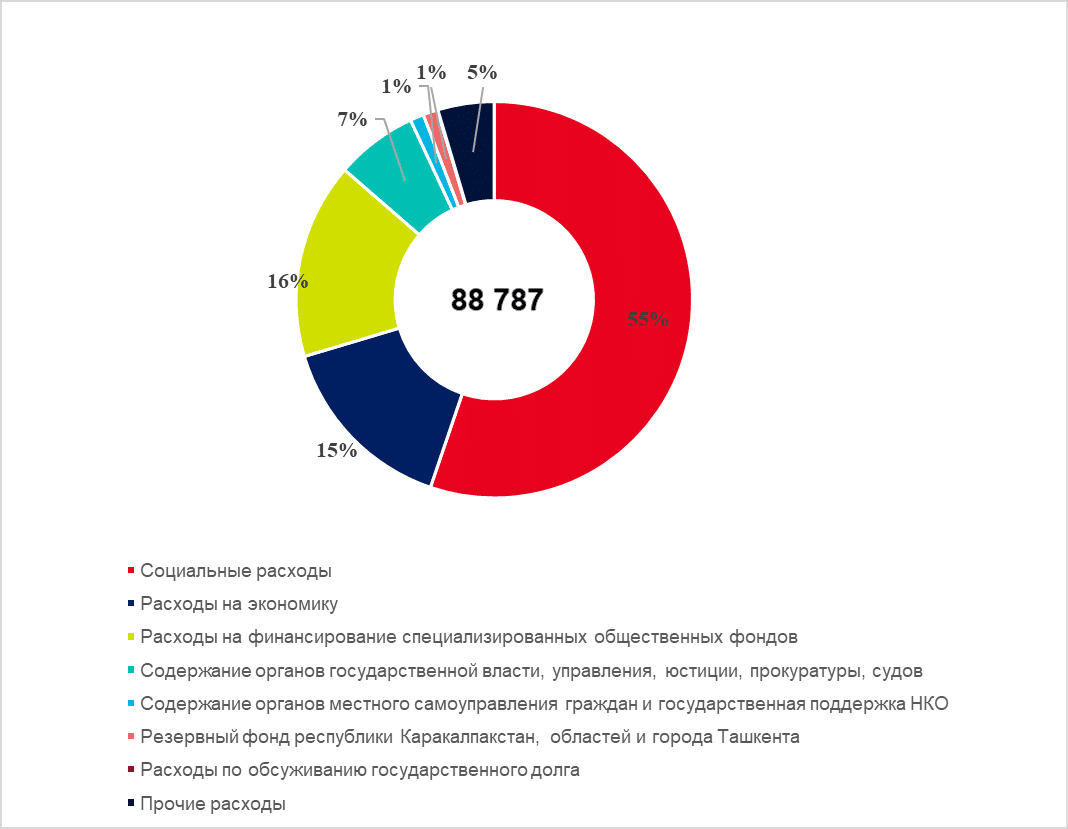
In Tashkent, the distribution differs due to its capital city status. Social expenditures accounted for 36%, economic expenditures for 30%, and investment financing for 19% (see Figure 3).
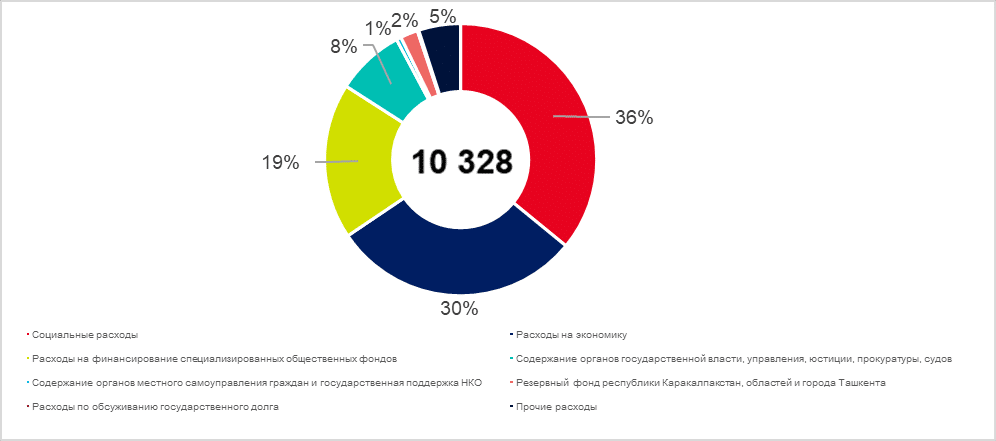
Figure 3. Expenditures of Tashkent City for 2022, % (Source: Republic of Uzbekistan)
With limited budgets, cities cannot independently finance large-scale projects. This necessitates co-financing from the national level or private businesses.
It is highly probable that many major projects implemented in Tashkent over the past seven years, such as Yangi O’zbekiston Park, the Olympic Village, Navruz Park, and the reconstruction of the children's library, were financed both directly from the national budget and through funds. The influence of city authorities on such projects was likely limited.
Comparison of City Budgets
In this section, I will attempt to compare the budgets of global megacities with that of Tashkent. The choice of Tashkent for comparison is justified by its city-region status, which impacts the transparency of its budget data.
A comparison of expenditure items reveals that education and social services are consistently priorities in the budgets of all these cities. Transportation is a significant expenditure, especially in cities with developed public transport systems like London. Debt servicing and pensions represent notable expenses in cities like New York, reflecting the long-term financial commitments these cities undertake.
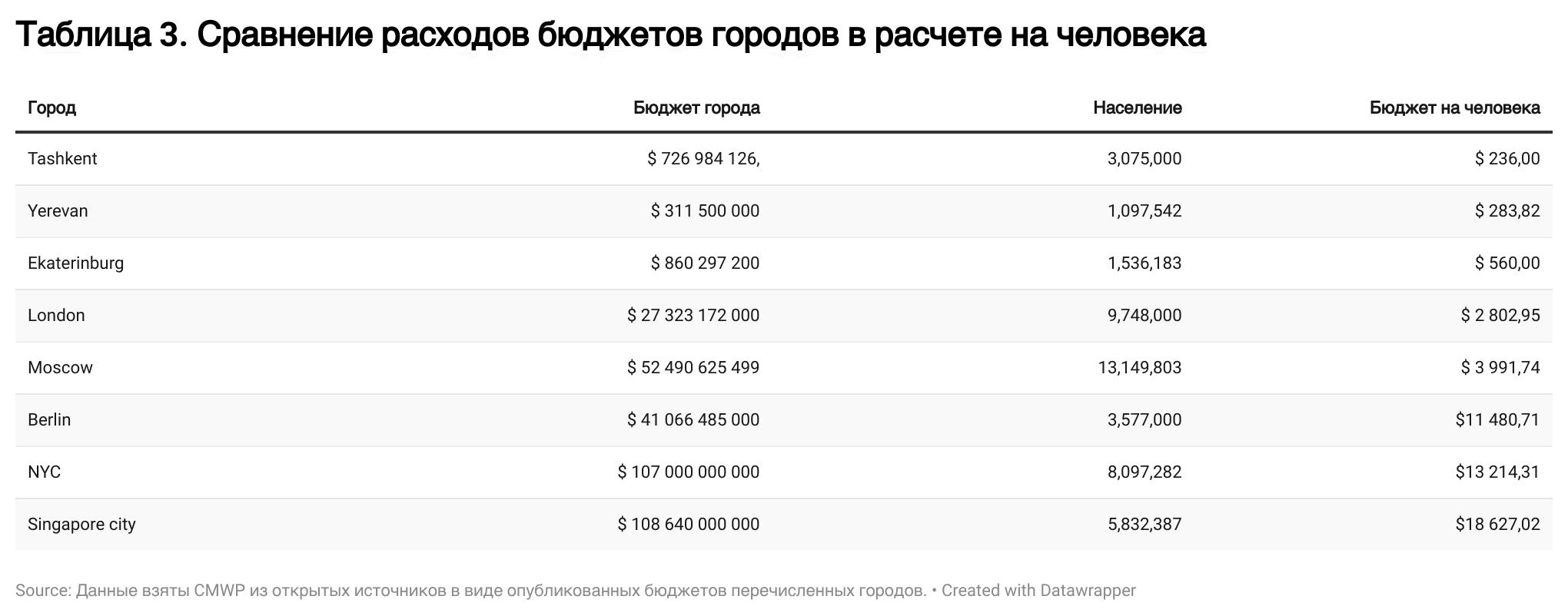
The next step involved comparing city budgets based on per capita expenditure (Table 3). This comparison has significant limitations due to differing budget responsibilities, labor costs, and resource prices. It should be viewed as an interesting fact rather than a basis for direct conclusions. Rather, it serves as an opportunity to initiate a discussion on the importance of independent municipal policy for quality urban development.
Conclusions
Based on the research conducted, it can be indirectly concluded that the implementation of large-scale projects within a city using its municipal budget is challenging due to financial constraints.
In such circumstances, one of the primary tasks of city authorities is to develop projects and seek co-financing opportunities from national authorities or private businesses. This statement does not absolve city authorities of responsibility but rather outlines the complexities involved in pursuing quality urban development policies.
We anticipate that in the near future, municipal policy will evolve towards expanding the powers of municipal authorities to increase revenues and attract them into the city treasury. This, in turn, will enable city governments to invest more in the development of urban infrastructure and the environment that residents need.
Source: Kursiv.uz
Photo: marya_83@mail.ru // www.depositphotos.com