The 32nd Annual Meeting of the Board of Governors of the European Bank for Reconstruction and Development (EBRD) and a business forum took place in Samarkand from May 16 to 18.
This year's event theme was "Investing in Resilience." For three days, government representatives, entrepreneurs, economists, and other experts discussed strategies for responding to the current crisis and plans for future sustainable growth.
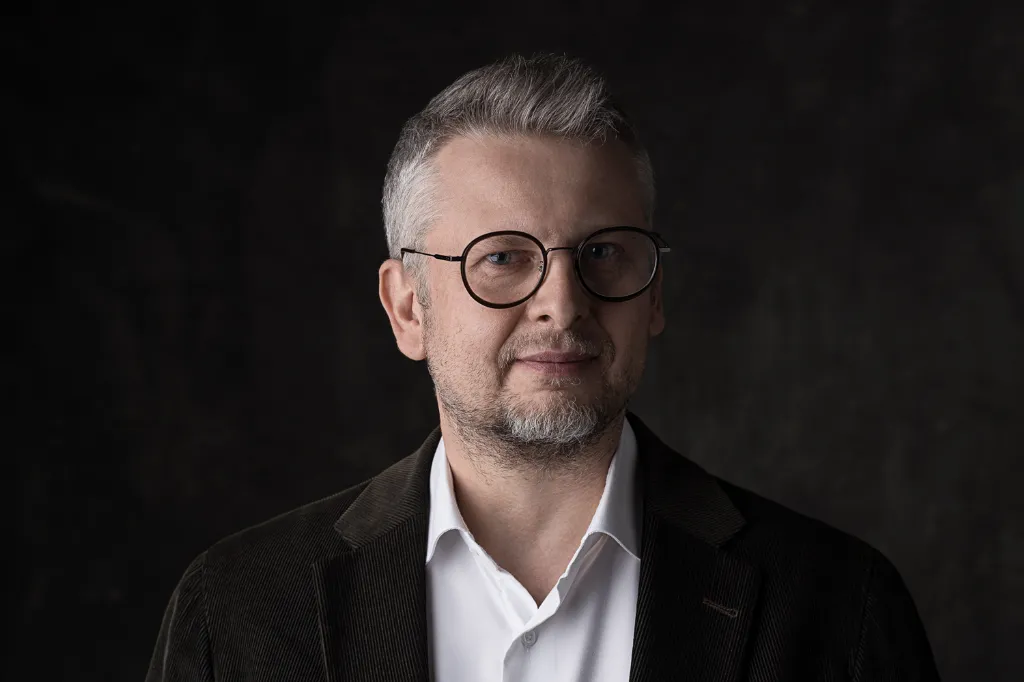
Denis Sokolov, CEO of Commonwealth Partnership Uzbekistan, attended the EBRD's annual meeting and business forum and shares his conclusions and observations:
"Many approach such forums with a degree of skepticism, not without reason believing that the words spoken in sessions have no bearing on everyday life. On one hand, this is true, but on the other, the consequences of statements do not manifest immediately.
A careful study of the materials and speeches allows one to 'glimpse into the future.'
Sardor Umurzakov, Head of the Presidential Administration, delivered the keynote address at the forum. He outlined six main directions for economic development:
1. Public Administration – a compact and efficient apparatus;
2. Green Economy – Uzbekistan should become a pioneer in the green transition in the region;
3. Small and Medium-sized Enterprises – support for private entrepreneurship;
4. Protection of investor rights, creation of legal structures, including a commercial court;
5. Privatization of state property;
6. Accession to the WTO.
Notably absent was the usual mantra about attracting investment. Officials have realized that investors are not mice drawn to the smell of cheese, but people who need a clear and transparent environment, as well as adequate returns.
For a segment of Uzbekistan's private business, the attitude towards investors is still akin to that of market buyers – they are shown mythical returns in the hope that the investor will "bite." This erodes trust. Market transparency, which investors require, lies in trust and the reliability of information.
Green Economy and regional leadership in the green transition are, of course, a nod to the forum's theme, but they genuinely represent an investment idea for the country. The green agenda is being integrated into the economic transformation program.
This means that, unlike other countries where economic mechanisms have already solidified within the old paradigm and green transformations entail additional costs, Uzbekistan can build a green economy from the outset. This is especially true given the active support from international financial organizations. For the real estate market, this implies that every new building should, if not have a green certificate, at least consider the trend towards decarbonization.
The organizers conducted a quick poll among participants on what is most crucial for building a sustainable green city. The answer "active participation of all stakeholders" won, followed by "effective planning," with "access to financing" and "innovative technologies" trailing significantly behind.
I must note that the best representatives of the business community answered this question. Indeed, participation at all levels in solving the decarbonization challenge is more important than financing. Financing can accelerate the process but does not guarantee the correct allocation of resources.
Regarding entrepreneurship and small businesses, as I understand it, the authorities are pursuing a liberal market approach: abandoning excessive regulation, which aligns well with the idea of a compact government. I would also highlight the high entrepreneurial spirit of the country's residents. Unfortunately, statistics do not fully reflect the situation, but compared to other countries, even those with higher GDP per capita, the craft economy is far more prevalent. This might be due to historical limitations on foreign trade and a greater emphasis on localization. However, this characteristic should not be underestimated: the craft economy is one of the country's resources for resilience.
Overall, I would describe this strategy as follows: we apply impact where maximum multiplicative effect can be achieved, create an environment traditional for a liberal economy, and ensure free entrepreneurship. This is a very pragmatic approach.
Although Central Asia is showing faster economic growth compared to the global economy, this may not be enough to provide jobs for a young and growing population. This means that a post-industrial economy needs to be developed, which not only creates high-paying jobs but also fosters solvent consumer demand.
As Georgiy Paresishvili, head of the Tashkent Stock Exchange, stated, listing a company on a local exchange creates demand for legal services, financial consultants, appraisers, and so on.
Uzbekistan's economy is growing rapidly, and maintaining this growth rate requires a developed financial system. Two years ago, the Central Bank shifted to an inflation-targeting strategy; now, the task is to develop lending in the national currency. This necessitates a reduction in interest rates and inflation.
Regarding privatization of state property, I liked the point that before privatizing companies, it is necessary to transform their management. In other words, they need to be managed like private businesses. This is an ambitious task, as countries often try, conversely, to shed what they cannot manage effectively. As a result, assets are sold at a lower price and end up in the hands of speculative investors.
Concerning accession to the WTO, many mistakenly believe that joining this organization leaves the domestic market unprotected. In reality, the WTO provides regulators with standard and effective tools to protect both the domestic market and exporters. Of course, this toolkit needs to be mastered – it is much easier to impose prohibitive duties administratively. Moving towards integration with the WTO is essential, as every step in this direction is good news for the investment climate.
And finally. Many criticize me for paying too much attention to official rhetoric, arguing that what is said is less important than what is done. I believe that when analyzing actions, one should apply the principle of falsification rather than confirmation. In other words, the successful implementation of a strategy is determined not by isolated supporting facts (e.g., how many small businesses have opened) but by minimizing opposing trends (how many businesses have gone bankrupt due to excessive regulation).
Essentially, this is how the country's development vector should be assessed – by whether real steps are being taken in the direction opposite to what is declared. This is what the investment community looks at, not at triumphant reports."
Source: Spot.uz
Photo: Presidential Press Service