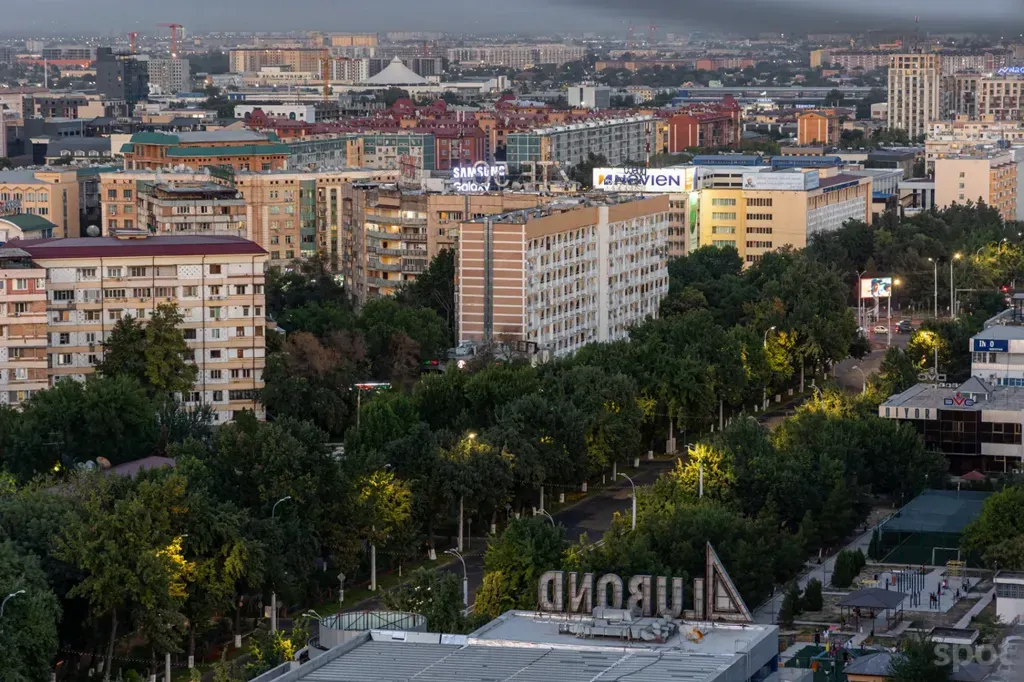
By 2035, Tashkent's population is projected to increase by a quarter, reaching four million people, solidifying the Uzbek capital's status as the largest city in Central Asia. To transform the city into a polycentric metropolis, the government is establishing a major business hub – New Tashkent, which is intended to alleviate the strain on the city's transport system and expand the capital's residential and commercial real estate stock.
Considering the new districts, by 2035, the housing stock of Uzbekistan's capital could increase by 55%, and office real estate area by 460%, to 2.15 million square meters.
In its report "IQ City Planning Tashkent," international commercial real estate consulting firm Commonwealth Partnership Uzbekistan (CMWP, formerly part of the global Cushman & Wakefield group) discusses the current state of Uzbekistan's capital and its development forecasts for the next decade.
Urban Planning
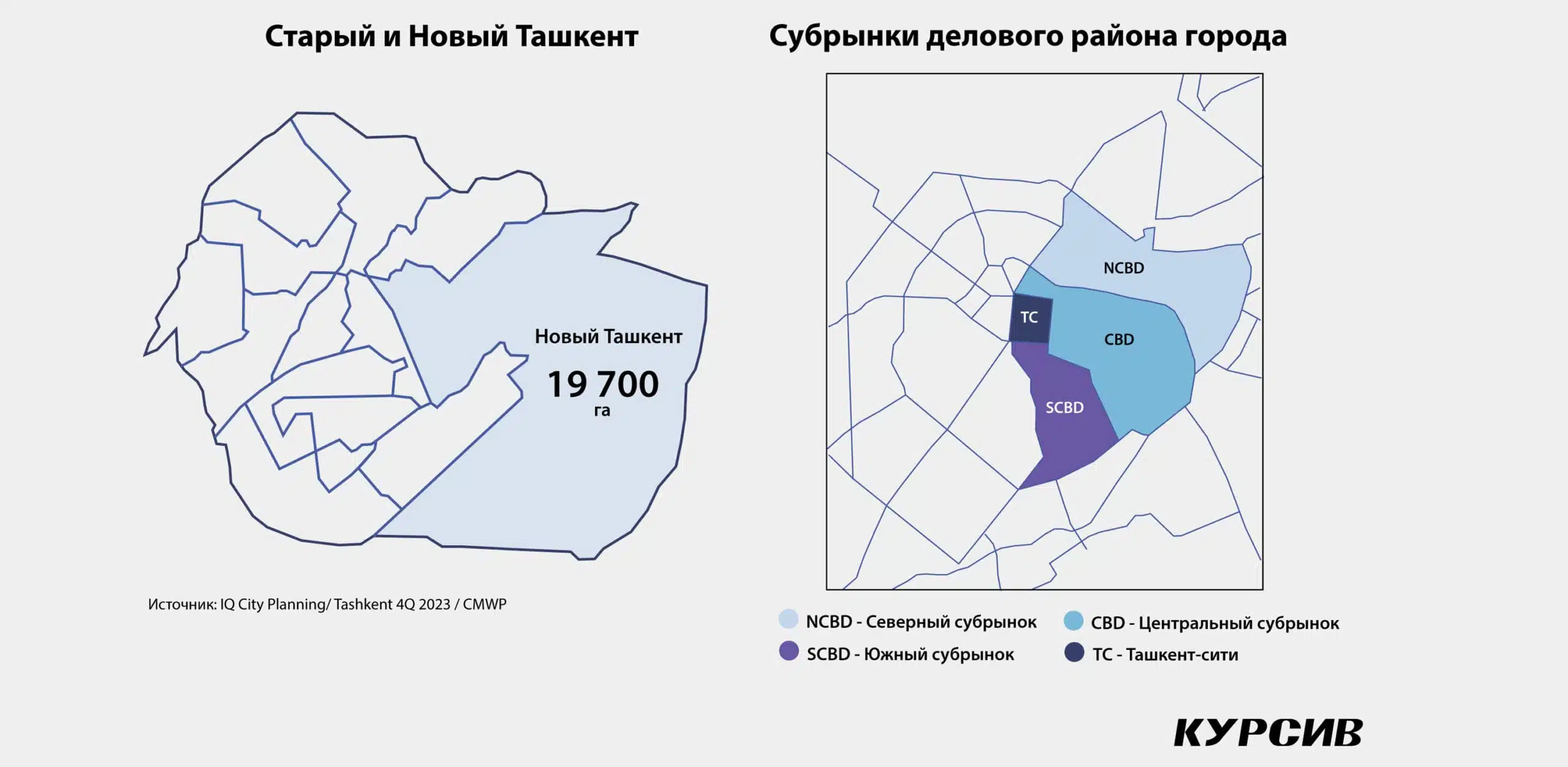
Tashkent, according to the city administration's plans, is to become more polycentric. The capital is growing eastward. In 2020, a new district, Yangihayot, was established. Currently, active preparations are underway for the implementation of the "New Tashkent" project (projected timeframe 2023–2045) northeast of the metropolis.
Today, over a third (35%) of the city's total area is occupied by individual residential buildings. However, according to CMWP calculations, only 25% of the population lives in them. The majority of the population (62%) resides in medium-rise buildings, which occupy 12.3% of the city's area. Industrial territories are allocated 16.8% of urban areas. Commercial and business (retail) and public and business (offices) infrastructure account for only about 4.7%.
New Tashkent aims to become a new business center. According to plans, administrative bodies will be relocated to the 19.7 thousand hectares area, creating up to 200,000 jobs. Housing for two million people will be built here (in the first stage – high-rise buildings for 100,000 residents). The "New Uzbekistan" university, a new National Library building, a theater, and other public spaces will be established. Two metro lines will connect the existing city with New Tashkent. The relocation of the state apparatus is expected to drive the development of the territory.
"The creation of a new major business activity hub in the city can potentially reduce the burden on the city's transport system and shorten daily commute times, which will positively impact the environment," notes CMWP in its report, but cautions: "The risk lies in the delay of administrative bodies' relocation, as they effectively create a critical mass for the emergence of a viable business district. The integration of New and Old Tashkent is critically important. Without a cohesive policy, this could lead to catastrophic problems for the environment, transport, and utility infrastructure."
Experts identify the payback of business projects in the new territory as a key issue, specifically the demand from companies for remote office spaces and the construction timelines for residential real estate needed to support the business function.
Existing city areas, according to CMWP, also require attention from the authorities. In particular, industrial zones, about 40% of which are used inefficiently, as well as areas of individual private housing, need redevelopment.
Temur Akhmedov's opinion piece "We are building Tashkent, not a second Dubai"
Housing Construction
As of July 1, 2023, according to UzStat, nearly 3 million people live in Tashkent. Since the beginning of the year, the population has increased by 43.1 thousand people. CMWP attributes population growth partly to attracting labor from across the country to the capital's job market. Experts predict that by 2035, Tashkent will be home to 4 million people, and by 2050 – 5.4 million.
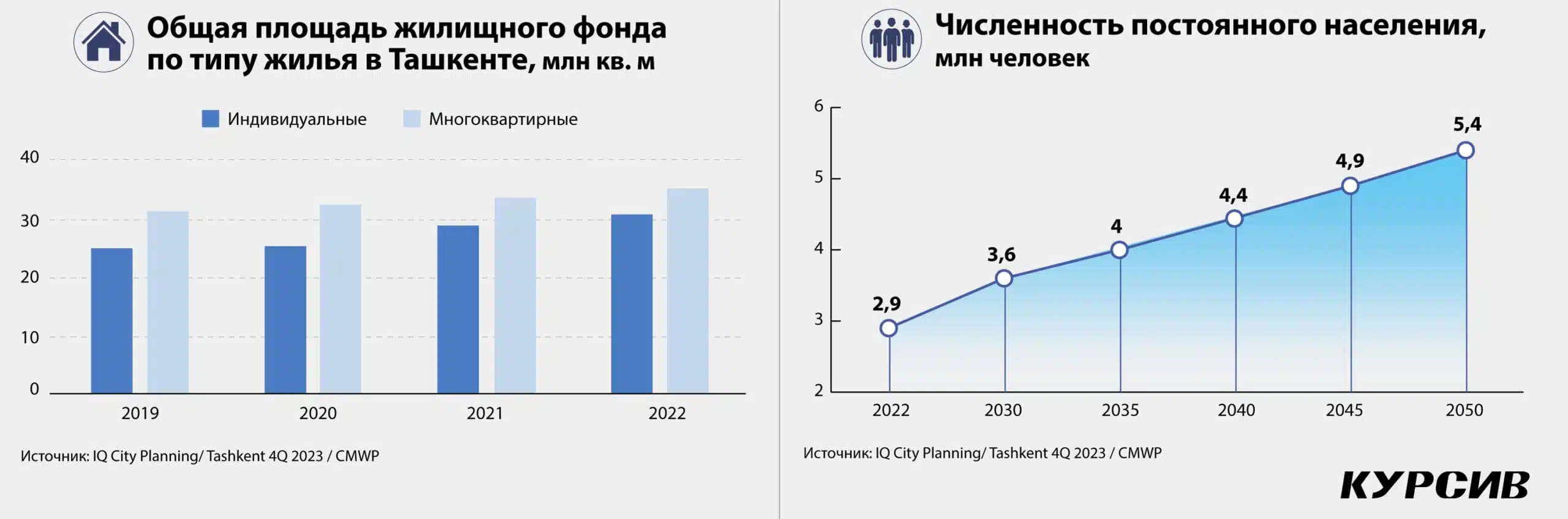
The housing provision rate in Tashkent at the beginning of this year was 22.8 sq. m per person. However, up to a third of the city's population lives in private households, which significantly inflate the average statistical figure.
The average population density in Uzbekistan's capital is 145 people/hectare in residential areas and 68 people/hectare in the overall city area. The most densely populated districts are the center, Chilanzar, Sergeli, and Yunusabad. The peak density is in the Ts-2 block (center-2), with 1,480 people/hectare. Such high population density is comparable to global cities like London, Hong Kong, and Milan, according to the "IQ City Planning Tashkent" report.
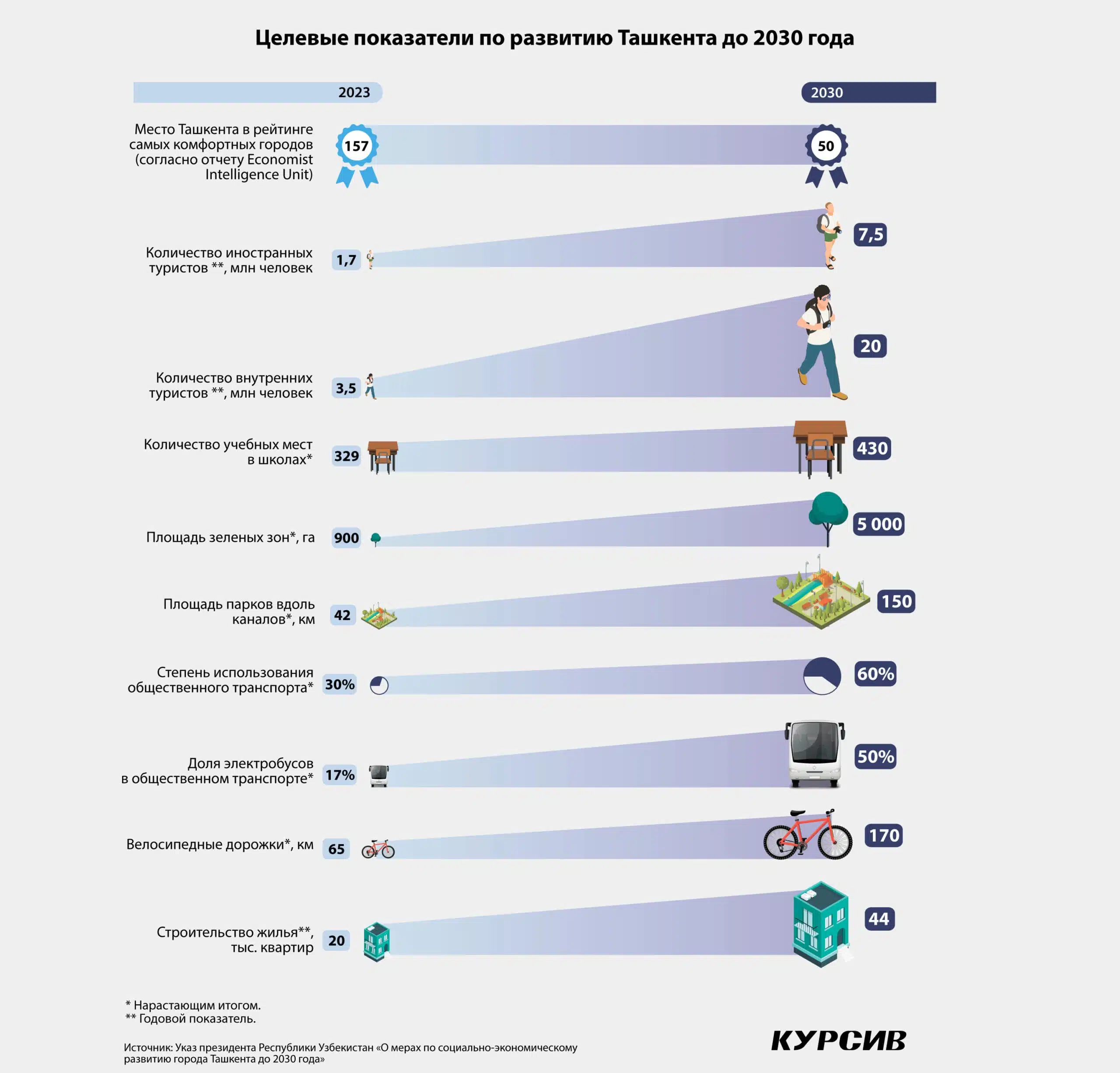
The "Tashkent-2030" city development strategy envisages a 45% increase in housing construction volume, to 44,000 apartments per year. The main volume of housing stock, according to CMWP, will be built outside the Small Ring Road.
In 2021, to improve housing conditions for the population nationwide, "New Uzbekistan" residential complexes began construction. In Tashkent, such a complex with 1,536 apartments is planned for the Sergeli district.
For the New Tashkent district in the southeast (Yukorichirchik and Urtachirchik districts of Tashkent region), nearly 20,000 hectares of land have been allocated. The first phase of development includes the construction of housing and infrastructure for 100,000 residents on an area of 2,500 hectares.
CMWP experts note a shift in consumer behavior among real estate buyers – apartment square footage is now less important than before. Over the past two years, this has led to a 1.5-fold reduction in the average apartment size, down to 65 sq. m.
"In line with our population growth forecasts, accelerated construction of economy/comfort class housing outside the city should be undertaken to reduce the deficit of affordable housing. Further population growth requires not only an increase in housing stock but also its qualitative improvement: highly qualified personnel need quality housing," conclude Commonwealth Partnership.
Social Infrastructure
In Tashkent, according to CMWP experts, access to primary and secondary education is high. Over 90% of children live within one kilometer of state schools. However, schools lack qualified personnel, teaching materials, have low IT utilization, and are overburdened (most operate in two shifts). The share of private schools, according to the consulting company's estimates, is 3–7% of all educational institutions in the city. Including private institutions, school accessibility is 94%.
The situation with kindergartens is noticeably worse. Only 68% of children live within 500 meters of the nearest kindergarten. Private kindergartens constitute 45% of all institutions. The issue of kindergarten accessibility is particularly acute for residents living in the private sector.
Uzbekistan's capital lacks medical facilities, modern diagnostic and treatment equipment, and specialized doctors. Therefore, new medical centers are planned for construction in the city. For example, Indian company Aakash Health, as part of a public-private partnership, intends to build a modern medical city in Tashkent worth $100 million. To equip the capital's polyclinics and hospitals with technology and equipment, the government has allocated about 30 billion soums ($2.44 million). The process of providing medical services is planned to be digitized. Since this year, the implementation of a state medical insurance system has begun, which is expected to reduce budget expenditures and improve the quality of medical services.
By 2030, Tashkent is set to become five times greener. The area of parks and squares in the city is planned to increase from the current 900 hectares to 5,000 hectares. Currently, in areas with few green spaces and high density of low-rise construction, summer temperatures exceed 35°C. In contrast, the northeastern part of Tashkent is noticeably cooler due to the presence of the Botanical Garden and low building density.
Engineering Infrastructure
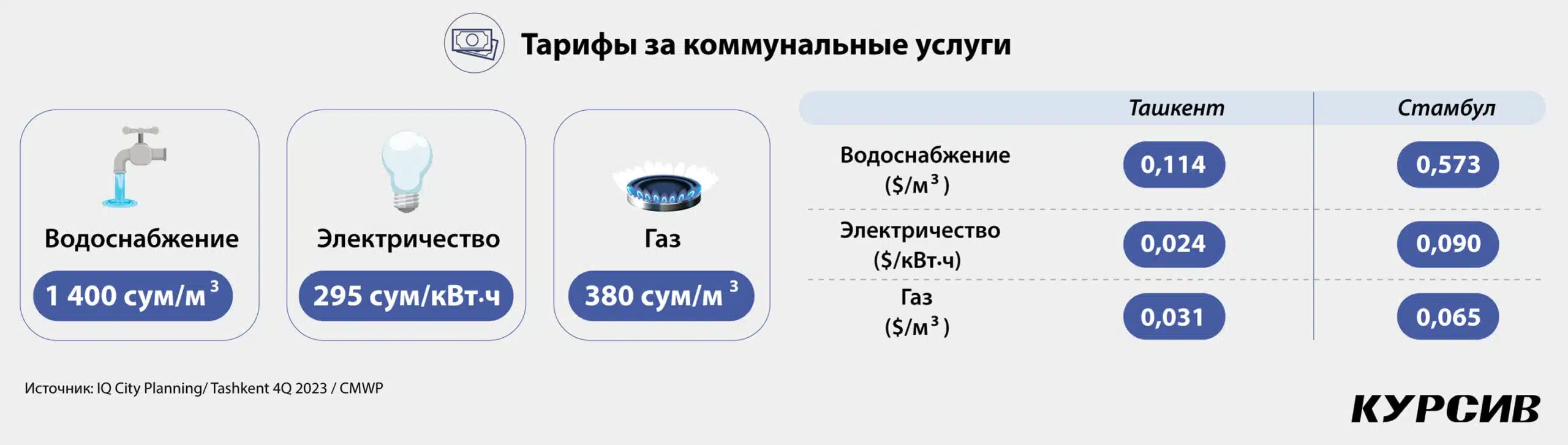
The extensive growth of the city is disproportionate to the capabilities of its outdated infrastructure. The wear and tear of engineering networks, insufficient technical maintenance, and inefficient management lead to frequent accidents, malfunctions, and service interruptions. To address this issue, CMWP experts, drawing on global practices, recommend that city authorities increase utility tariffs.
"In engineering infrastructure, the ability to maintain the infrastructure plays a crucial role. The annual budget depends on the revenue of the resource-supplying organization. In case of a high proportion of non-payments or low tariffs, this affects infrastructure maintenance. Currently, there are objective difficulties in concluding concession agreements. The main ones are regulatory and tariff-related," note CMWP experts.
 French company SUEZ has been engaged to transform the existing water supply system and will develop master plans for drinking water supply and sewerage systems.
To serve the New Tashkent territory, authorities plan to build a trigeneration station (a system that utilizes heat recovered from gas piston units in winter for heating and in summer for air conditioning), which will be the first such facility in Central Asia.
Transport
The number of cars in Tashkent has increased by a third (+34%) over the past four years due to population growth and improved living standards. By 2025, according to forecasts, there will be 120% more cars – 1.29 million.
The increase in car numbers in Tashkent leads to traffic jams, road congestion, a shortage of parking spaces, and negative environmental impacts. Worsening traffic is a reason to optimize traffic flows, expand interchange capacity, and introduce restrictions in the city center, according to Commonwealth Partnership.
"In global practice, various approaches and methods are used, such as paid entry into the city center or paid parking, combined with the development of public transport," states the "IQ City Planning Tashkent" report.
The authorities intend to double the use of public transport in the capital, from the current 30% to 60% by 2030.
"We believe that getting residents to switch to public transport is an extremely difficult task given the city's current structure, and success will depend on a set of conditions: stability and quality of service, brand recognition, and changes in residents' consumer habits," CMWP cautions.
 Alexey Letunovsky, Head of the Analytical Group at Commonwealth Partnership Uzbekistan, author of the "IQ City Planning Tashkent" report
In my opinion, the construction of New Tashkent is neither good nor bad; it is a necessity. Tashkent is a magnet for the population of Uzbekistan: salaries are higher here, and there are more opportunities. Given the high birth rate and migration, the demand for housing in the capital will only grow, peaking in 15 years when today's children become self-sufficient and form families. If developers' energy is not channeled into a constructive direction soon (i.e., by allocating new land for residential development), they will capitalize on every plot of land in the capital amidst high housing demand.
It is difficult to judge the quality of the "New Tashkent" project's implementation due to the lack of open information. So far, it is only known that there is a master plan (also not publicly available) without a cadastral map link. The visuals are appealing: main and auxiliary highways, a tram network within the new district, and metro lines connecting the new polycenter with the existing one are planned. However, this is just a vision; in practice, only 20 to 50% of what is shown in master plans is realized. The development of regulatory documentation for the project is planned to begin in 2024.
Project transparency is crucial. The development of residential and commercial construction in "New Tashkent" cannot proceed without investor awareness. Furthermore, residents will not buy apartments there until there is a clear understanding of the territory's development prospects.
Another important issue is the project's financing, or rather, the availability of partners willing to participate under a PPP scheme. Without them, the project's implementation will be challenging.
Source: Kursiv Kazakhstan
Photo: shutterstock