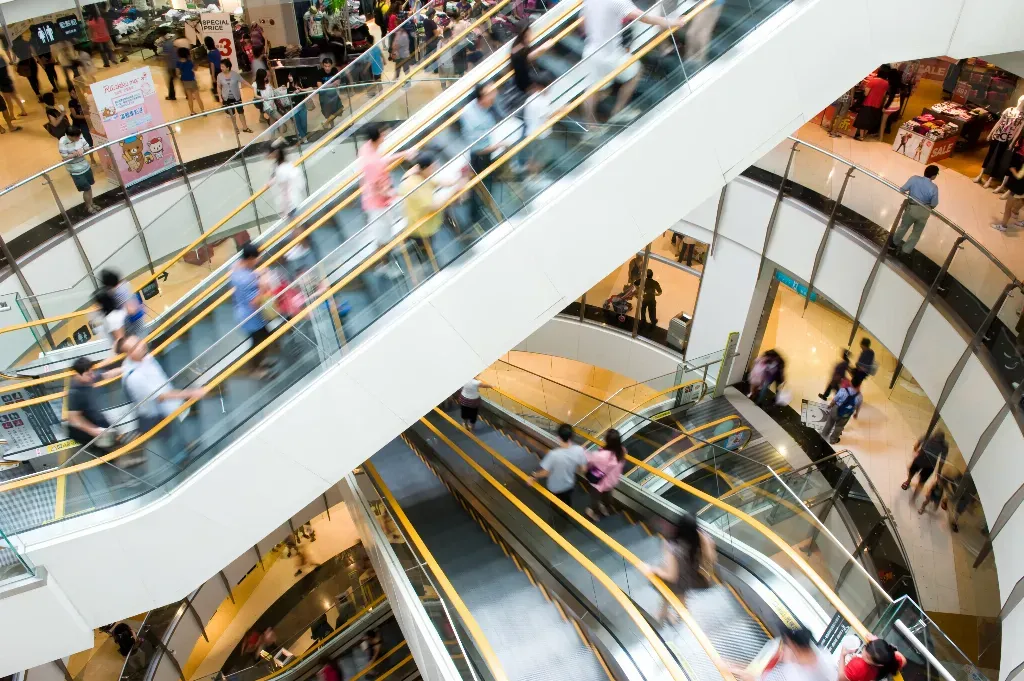
Urban retail tells us about the culture of a country and its people no less than museums do. The diversity of retail formats reflects the vibrancy of city life and economies. What retail business solutions help develop these formats is discussed in the "Real Estate Language" column by analyst Denis Sokolov.
Denis Sokolov is a partner and general director of the international commercial real estate consulting company Commonwealth Partnership Uzbekistan (CMWP), and a member of the Royal Institution of Chartered Surveyors (RICS). In his column "Real Estate Language", the expert discusses the structure of this market, its characteristics, and speculates on its development forecasts.
The beauty of a modern city lies in the diversity of its architecture, nature, fashion, cars, and, of course, retail formats. It is a misconception among the educated class that shops and shopping are somehow less worthy than museums and theaters.
Trade has always been the foundation of human culture. People embarked on journeys to establish trade connections and created legends about their expeditions. Ancient cities grew around marketplaces.
Fairs in the central squares of some European cities still attract tourists today. In addition to fairs, modern travelers visit shopping malls and flea markets, and pop into random shops and retail parks. While each brand targets its specific audience, on a central shopping street or in a large mall, everyone can find a place that suits their taste.
If 200 years ago poets and writers spent their time in taverns and bazaars, observing the customs of their contemporaries, then today shopping malls serve this function. A trip to a shopping mall allows not only to make purchases but also to immerse oneself in the authentic environment, get acquainted with the fashion, habits of local residents, and their behavioral patterns.
According to data from Commonwealth Partnership analysts, in 2023, the average rental rate in Tashkent's shopping malls increased by 14% in US dollars. As of the end of December 2023, renting a 100 sq. m space on the ground floor cost about $40 per sq. m per month. However, in any modern shopping mall, it is difficult to find two tenants paying the same rental rate. The shopping mall format implies that individual terms are agreed upon with tenants. This approach is the basis of the mall's business model, distinguishing them from traditional markets.
The task of a shopping mall is to attract the maximum flow of solvent buyers. A person should be able to buy any product, receive any service, have a snack, and be entertained without leaving the mall. This requires a variety of goods, prices, and brands.
Not all stores can pay the same rent, as each type of business has different profitability and margins. In real estate, the paradox is that if a shopping mall is filled only with stores willing to pay high rent, it will attract homogeneous types of stores. This principle is the basis of clothing markets, which are unable to offer buyers a balanced product assortment, comfort, and service. And this is precisely why shopping malls are displacing markets worldwide.
To offer visitors variety, shopping malls provide special terms to each store, depending on its business type, attractiveness to buyers, etc. In global practice, companies like Abercrombie & Fitch, Gap, American Eagle, Michael Kors, and others, for whom occupying prime locations is crucial, pay the highest rates.
At the same time, supermarkets and hypermarkets pay significantly less. The logic is simple: the more customers a store can attract, the less it is willing to pay for rent.
The diversity of tenants is called tenant mix, and it is this mix that distinguishes one shopping mall from another. Behind every successful shopping mall, there is always a team of professional specialists dedicated to tenant selection.
For people to shop, it is necessary to offer minimal prices, which requires reducing costs, including rent. The cost of any product we buy in a store includes rent for the premises. A shopping mall does not rent out space; it sells stores access to consumers. Not all shopping malls offer expensive goods. Worldwide, there are many retailers specializing in inexpensive goods, such as FixPrice or the British C&A.
International retail companies prioritize locating stores in shopping malls where they can calculate footfall and assess potential revenue. Today, Tashkent and Uzbekistan are in dire need of world-renowned brands that set standards for quality, service, and warranty support. And shopping malls serve as bridges for international cooperation.
The emergence of international players in the domestic market often causes concern even among government officials and businesses. One often hears that foreign retailers will not benefit the country and city because they repatriate profits. In reality, the production cost in the price of a product on a store shelf is about 25-35%, the retailer's profit is 10-15%, and the remaining half is everything spent in the country on taxes, advertising, logistics, real estate, and salaries.
The retail business creates a large number of jobs. In France, the trade sector employs over 3 million people, or 11% of the total employed population. In Uzbekistan, the share of employment in this sector is also around 10% of the economically active population, but its efficiency is much lower. On average, one person working in retail in Uzbekistan sells goods worth $10,000 per year, while their counterpart in France sells nearly $200,000 worth, i.e., 20 times more.
This difference is explained not only by the income gap but also by the weak development of retail technologies and formats in Uzbekistan— that very diversity. The country lacks retail parks featuring large-format stores, outlets, department stores like Galeries Lafayette, hypermarkets, and so on.
Therefore, the main task for the city today, represented by businesses and economic regulators, is to increase the efficiency of trade and implement product quality and safety standards.
European tourists immediately notice gender disparities in Uzbekistan, the specifics of which are also reflected in trade. In Europe, 60% of shoppers are women. Therefore, stores primarily cater to them, placing women's departments in the most convenient and high-traffic areas, and men's departments in basements or on the second floor. Here, conversely, male shoppers are noticeably dominant. This is just one of the most interesting observations available to an attentive tourist.
In the coming month, we anticipate the opening of Tashkent City Mall, which employs modern approaches to tenant selection. This event is significant not only for the capital's fashionistas but also for businesses. It will demonstrate how ready the city is to embrace modern retail formats and shopping as an element of urban culture.
Source: Gazeta.uz
Photo: Evgeny Sorochin / "Gazeta.uz"