Uzbekistan's real estate market is developing rapidly. New residential complexes and business centers are appearing in the capital one after another, but behind the beautiful facades and renderings lies a much more complex question: who and how will manage these facilities. Today, it is no longer enough to simply build a high-rise building – it needs to be brought to life, its declared concept maintained, and services provided that meet the expectations of residents and tenants.
Planned a coffee shop, but got a tire service
The most vulnerable point of any residential or multifunctional complex is its ground floors. Theoretically, they should set the tone for the entire concept: create a comfortable environment, shape the style, and uphold the developer's promises. However, in practice, it often happens differently.
In Uzbekistan, the cost of money is high, and developers strive to recoup their investments as quickly as possible. Most often, this means selling off the entire building in parts. As a result, one complex can have hundreds of owners, each with their own vision. Someone planned to open a grocery store but changed their mind and opened a restaurant. Another bought a space "for future use" and keeps it empty. This leads to chaos that destroys the original concept.
Meanwhile, global experience shows the opposite: if a developer wants to maintain a unified style and the promised concept, they should not sell the ground floors. The commercial part should remain under their management or in the hands of an institutional investor ready to maintain the strategy. In Russia and Kazakhstan, this task is solved through real estate funds, where pools of premises are consolidated and managed professionally. In Uzbekistan, such a mechanism is not yet legally possible, but sooner or later the market will come to this.
How much does a security guard cost for 4 million?
Even when the concept is maintained, the developer and management company face another problem – operating costs. Modern engineering systems are expensive to maintain: they require specialists, sometimes even invited from abroad.
"Why does your security guard get four million? Hire one for two" – such questions directed at management companies arise regularly. People compare with familiar amounts, without considering that the building's class requires a different level of service. If a project is declared as Class A, it must correspond to it in every aspect: from climate control systems to security levels.
This is where the key mission of the management company is revealed: it works for the residents. Its task is not only to ensure cleanliness or security but also to protect the interests of the building's users, ensuring comfort and safety that directly affect the property's value and profitability.
One for all and all for one
The issue of payment discipline remains one of the most pressing. A modern building requires regular and significant expenses, and non-payments by individual owners can pose a threat to stability. The legislation has addressed this problem: the tariff for the next year can be formed taking into account shortfalls. In other words, the debt of individual residents is distributed among all others when planning the budget.
This solution is not without its drawbacks – conscientious owners have to bear an additional burden. But the mechanism also has a positive effect: it fosters a culture of collective responsibility. Neighbors begin to monitor the situation themselves, demanding that each other fulfill their obligations. In this sense, the law creates conditions for self-regulation within communities.
Walking distance or walking too far?
Commercial spaces on the ground floors are an important source of income for developers and owners. But it is precisely here that it is especially easy to overdo it. In their eagerness to earn more, developers sometimes saturate a complex with unnecessary shops or offices, without considering real needs.
The modern approach involves analysis: how many families will live there, what is their number and income level, what is available within walking distance. For this, geomarketing is used, needs of the area are predicted, and only after that is the pool of commercial premises formed. Otherwise, you risk ending up with vacant spaces and disappointed residents.
From architecture to profitability
Developers like to talk about the beauty of facades and the number of square meters. But the reality is that architecture is not just about form, but also about economics. Every decision made during the design stage directly affects how much the building will generate in the future. Mistakes here are costly: a poor layout limits rental potential, creates vacant spaces, and complicates operation.
A well-thought-out structure, flexible spaces, and universal engineering systems allow a building to remain in demand for decades. This means one must think not only about how to sell a square meter here and now but also about how to ensure a stable cash flow for decades to come.
Who's who in management
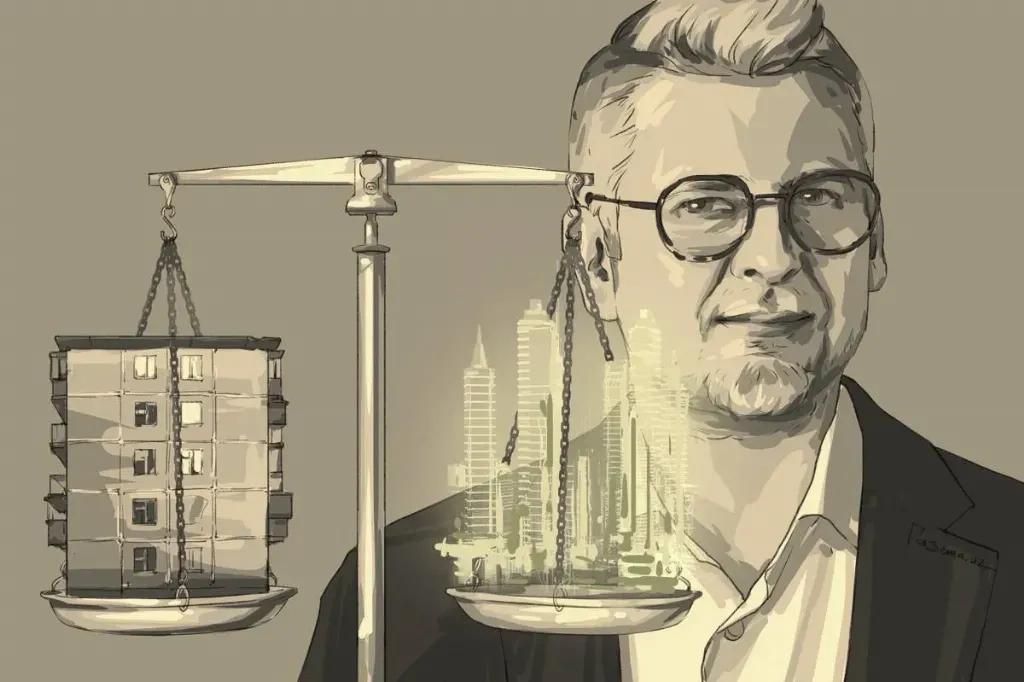
For a building not just to stand but to generate income and retain its value for decades, it is important to understand that real estate management is multi-layered.
Asset management is the investor level. Their task is to view the property as an asset and increase its capitalization. They don't count light bulbs and tiles but the value of the building as a whole: how the price will increase, how much resale will bring, how profitability will be reflected in reports. An asset manager looks at real estate through the eyes of funds and major players: "The building should appreciate, not age."
Property management is the rental income level. Stability is important here: ensuring spaces are occupied, tenants are satisfied, contracts are signed, and payments are made on time. This involves working with brands, chains, restaurants, and offices. If a property manager is successful, the property turns into a stable business, not a lottery with vacant squares.
Facility management is operations. The most "down-to-earth" level: engineers, security, cleaning, parking access, office temperature, tap water. Facility managers are the ones first remembered when the elevator or air conditioner suddenly stops working. And they directly determine whether a tenant will stay in the building or look for a place with "better service."
All three levels exist simultaneously and are interconnected. If facility management is weak, property management cannot retain tenants. If property management falters, asset management cannot fulfill its main task – it cannot increase capitalization.
The interests of these parties do not always align. For an asset manager, increasing capitalization may be more important than the comfort of residents here and now. For a property manager, the main thing is to collect rental payments, even if the tenant is dissatisfied with the service. Facility management is forced to side with users, explaining to investors and developers that without satisfied residents, the building quickly loses both tenants and capitalization.
At the intersection of these contradictions, the true work of a management company is born: finding a balance between profit and comfort, short-term figures and the long-term value of the property.
One owner – one vote
In this regard, Uzbekistan is ahead of its neighbors and even Russia. Here, decisions in buildings with multiple owners are made not by the number of square meters but by the principle of "one owner – one vote."
This fundamentally changes the balance of power. Even if the developer owns half of the building, they remain just one owner among others and cannot dictate terms unilaterally. Decisions are made through discussion and compromise, not through the dominance of the largest player.
This arrangement may seem more difficult and conflict-prone, but in reality, it ensures fairness and protects the interests of all participants. This approach demonstrates maturity: Uzbekistan is setting an example of fairer management than many markets where owners of large blocks of space effectively dominate all others.
Future Development
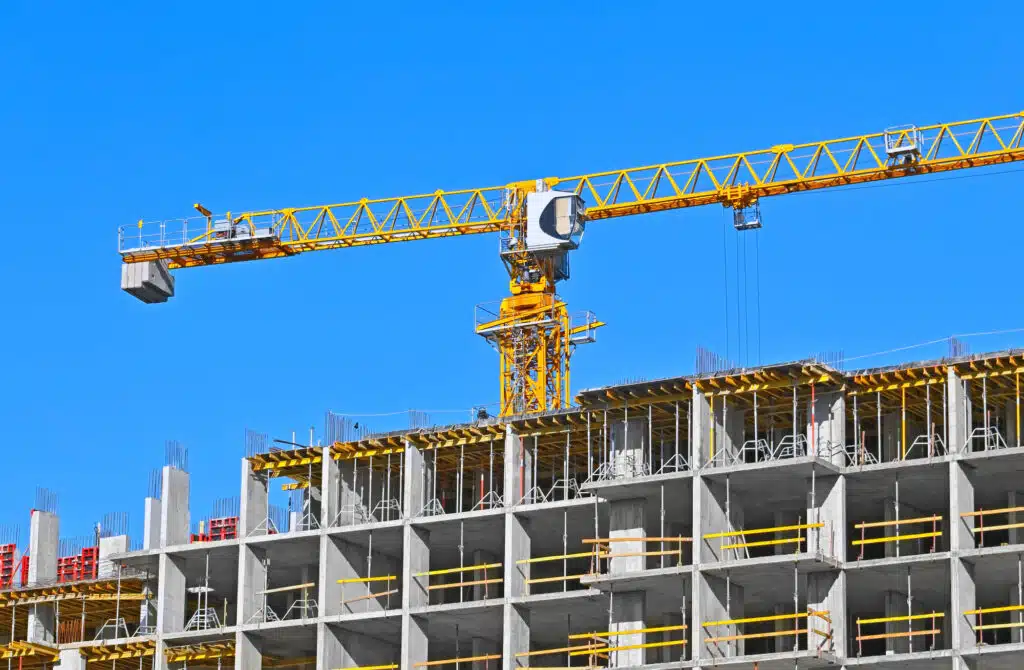
The modern market dictates a simple truth: it is no longer enough to just build a high-rise. It is necessary to create an environment, plan services, and project the building's life for decades to come.
To achieve this, developers engage retail consultants, geomarketers, and property management specialists. They help calculate how many and what kind of commercial spaces are truly needed, where demand will be, and what format will ensure sustainable profitability.
These decisions are not about a "fashionable concept." They are investments in resident and tenant loyalty, in the developer's image, and in long-term financial stability. This is how a new culture of development is being formed in Tashkent: from towers for the sake of square meters to living complexes where architecture becomes a tool for economics and quality of life.
Source: Votum