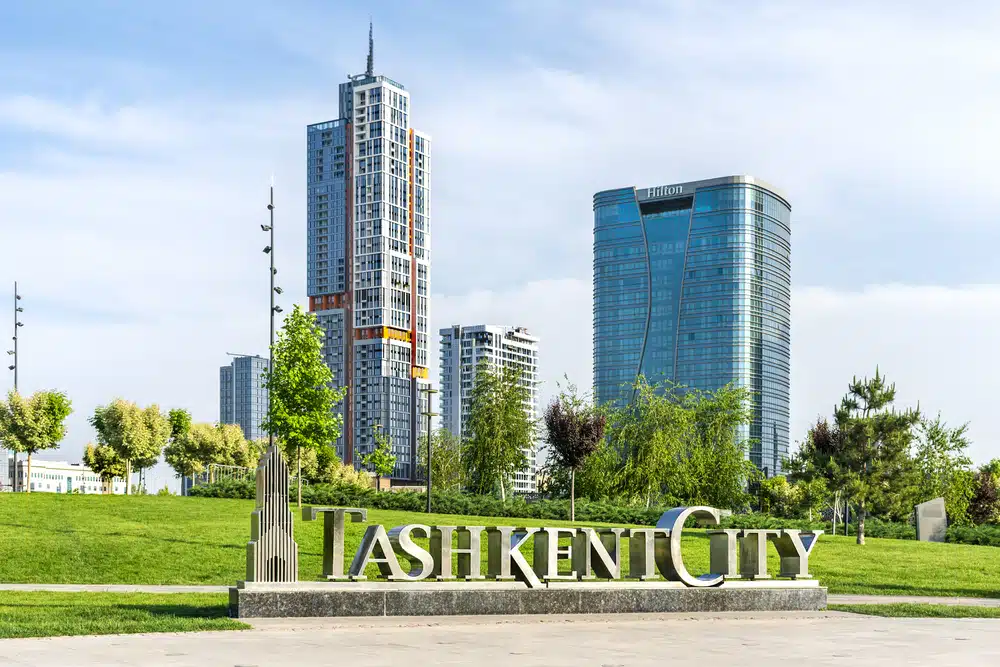
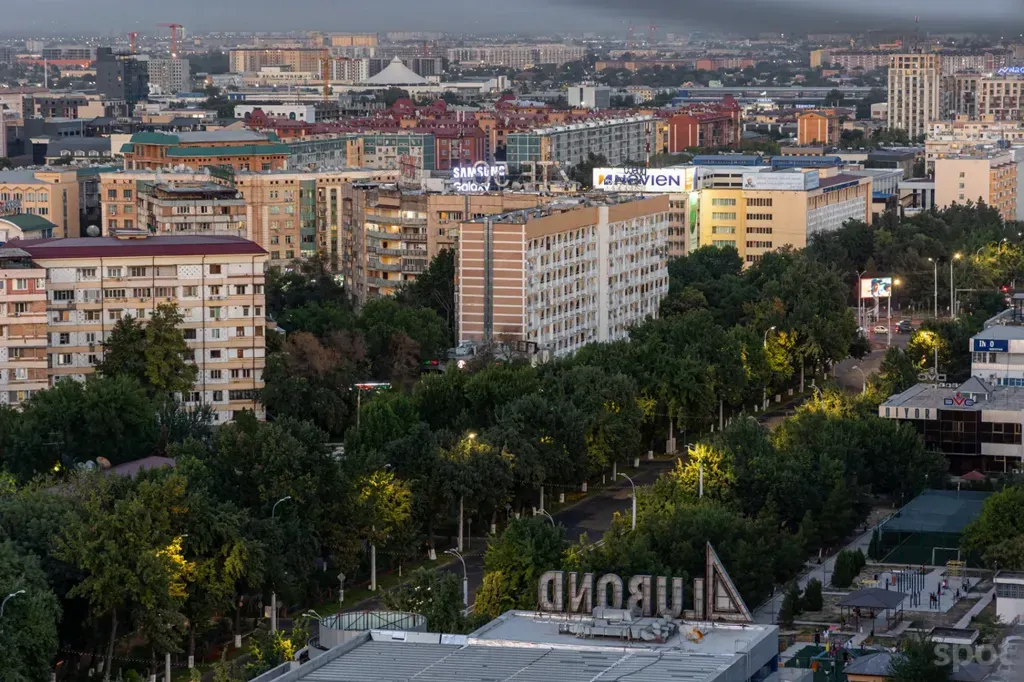
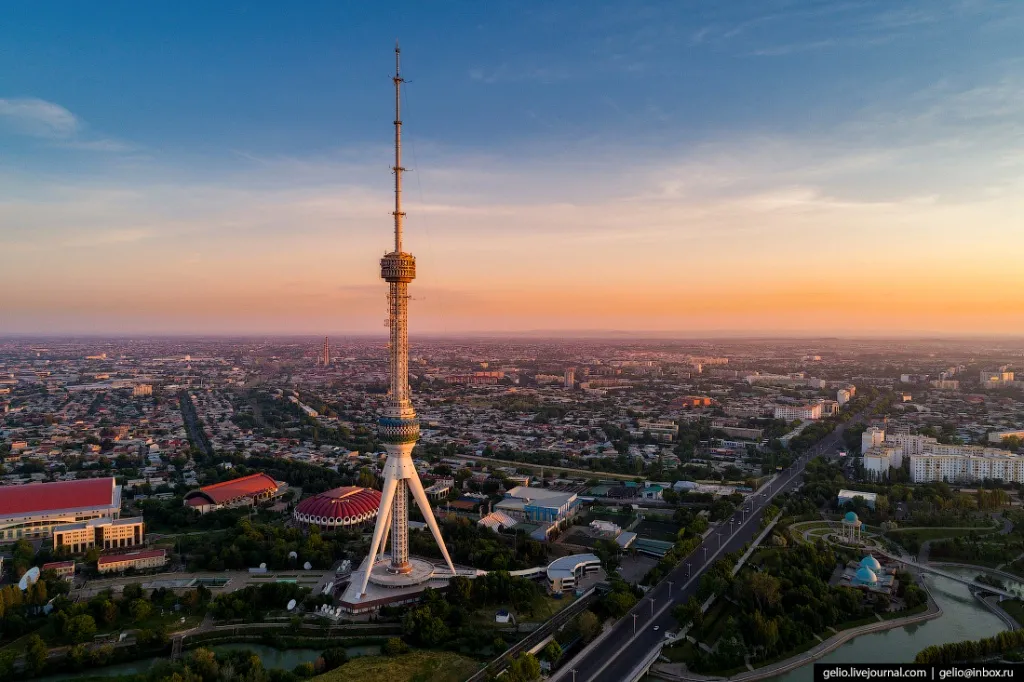
Denis Sokolov, CEO of Commonwealth Partnership, discusses in his column for Spot what makes Tashkent attractive, the role of commercial real estate, and why it is so important to change our perception of a building's life cycle.
Urbanization is Underway
Uzbekistan's economy is one of the most dynamic in the region. High growth rates in the coming years will be driven not only by industrial development but, primarily, by the advancement of urban culture and a post-industrial economy.
Globally, economic activity is concentrated in cities, and the size of a city plays a colossal role.
As the largest agglomeration in the region, Tashkent has yet to claim its rightful place in the Central Asian economy.
Today, the city is attracting immense attention on the international stage, possessing all the necessary elements to become a focal point on Central Asia's investment map and demonstrate accelerated growth over the next decade.
However, not everything is straightforward. I believe many have encountered difficulties in attracting international investors for seemingly attractive projects in Uzbekistan.
Hunting for Investors
There's a common joke in the West that if an ordinary person has five senses, an investor only has two: greed and fear.
Translating this into financial terms, any investment decision is made solely based on the balance of profitability and risk.
On a colloquial level, risks are often understood as the threat of property confiscation, administrative pressure, and similar dangers. However, the primary risk factor for an investor is market opacity.
It might seem like we understand the market, but an investor reading the Financial Times, relying on analytical reports prepared to international standards, and believing success stories of companies they know, unfortunately, lacks sufficient information about the Uzbek market.
We often see news in the media about large investment deals, frequently involving the state, which subsequently enable the development of entire industries.
However, as practice shows, urban life is fundamentally transformed by medium and large investments, particularly in commercial real estate.
When purchasing an asset, an investor expects it to generate annual income and appreciate in value. This is where the first dangers lie.
In developed Western markets, office buildings and shopping centers enter into lease agreements for 5, 10, or 15 years, with every detail meticulously outlined. This way, the owner knows precisely how much they will receive in 5, or even 15 years.
Changes in asset value depend on monetary policy, urban development, the emergence of competing properties, and many other factors.
In other words, income and value forecasting, a routine operation in a developed market, becomes a highly creative task for Tashkent, based on assumptions, models, and expert assessments.
Investors who rely on calculations and models are called institutional investors. The entry of such companies into the market also drives the development of bank financing, the insurance industry, and modern management systems.
Currently, Uzbekistan cannot offer assets that meet the requirements of institutional investors. However, the creation of such assets is already underway – this requires a shift in perspective from "build and sell" to "build, lease, manage, and then sell."
Real estate investors are constantly seeking new markets, as the capital involved in this sector is immense.
For instance, before 2014, the volume of institutional investments in Russian commercial real estate was €7-8 billion per year. After 2015, this volume decreased to €3-4 billion, while investments in Poland exceeded €6 billion annually, and those in the Czech Republic and Hungary tripled.
In other words, the altered regional risk landscape immediately reoriented capital flows. These investors included European and American companies, as well as South African, Australian, and others.
A Long and Happy Life After Construction
For many developers in Tashkent, a building's life ends when it is constructed and sold. But this is not the case. If we look at a country's GDP structure, we see that construction accounts for 6% of GDP in Uzbekistan. We observe similar figures (5% to 7%) in other countries – the USA, China, Russia, Kazakhstan.
This means that regardless of the level of development, the construction sector's contribution to the economy is constant.
However, if we look at the "real estate operations" item, real estate contributes between 10% of GDP in Russia to 18% in China. In the USA, this figure is around 12%, while in Uzbekistan, statistics do not even distinguish this sector.
This is precisely the life of buildings after construction. It encompasses all the rent paid by tenants, maintenance, repair, and improvement works, services from designers and architects for interior finishing, financial services, insurance, and consulting.
But there is a second factor that is often overlooked. While a factory simply produces goods, a building is like a person whose salary increases over the years due to skills and experience.
Urban development, improvement of transport infrastructure, and increased living standards and education levels of citizens lead to a rise in the efficiency of office and shopping center utilization.
We have observed this phenomenon in almost all major cities where the value of commercial real estate has multiplied due to the city's increasing development. Paradoxically, it is precisely through commercial buildings that urban investments in public spaces and parks ultimately yield financial returns.
In the next 2-3 years, Tashkent will transition to a long-term real estate management model, where buildings and even apartments become financial assets used to attract credit resources. This requires a developed financial system. However, even today, those who purchase real estate, especially those building their own properties, should consider them as investment assets.
Source: Spot.uz