Modern Construction is Rapidly Accelerating.
Looking back, it's impossible not to notice how much the pace of construction has increased – from residential buildings to industrial facilities. This is due to the development of new construction materials, the active implementation of mechanization, and more integrated project cycles, including the fast-track format, where design and construction proceed simultaneously with phased decision-making.
All these changes are aimed at reducing project implementation timelines and optimizing processes. However, this presents a paradox: speed itself does not reduce quality, but it increases the risk of errors that directly impact the future operation of buildings.
Operation Begins at the Design Stage
The main contradiction in modern projects is that the faster construction proceeds, the more often decisions are made incompletely and "on the fly." As a result, some design decisions are corrected during the implementation phase, and operational issues are relegated to the background.
During the construction phase, not only the facility itself is formed, but also its long-term economic efficiency: i.e., what income it will generate and how quickly it will pay for itself. Despite this, the main focus is often on reducing capital expenditures (CapEx), while operational expenses (OpEx) are, unfortunately, greatly underestimated.
Yet, it is OpEx that largely determines the real cost of ownership. For example, the construction of a Class A warehouse costs from $650 to $1200 per square meter, while its operation costs $10–20 per square meter per year. Over a 10–15 year horizon, operational costs can equal the construction cost – therein lies the irony: saving at the start can lead to comparable expenses in the future.
Here are typical examples of design decisions that directly affect this balance:
- Cleaning Logistics: in multi-story offices, technical rooms are often forgotten on each floor. If they are only on the first floor, staff spend time traveling instead of cleaning, and the owner has to hire more people.
- Security Organization: poorly planned traffic flow and the absence of rest areas for security personnel lead to an increase in staff numbers and a decline in the building's image.
- Lack of Automation and necessary infrastructure incorporated at the design stage.
Implementing Building Management Systems (BMS) increases CapEx in the short term but reduces OpEx. BMS [Building Management System] is an "intelligent" system that automatically controls and manages lighting, ventilation, cooling, heating, etc., essentially all the building's engineering equipment as a unified whole.
Without such solutions, the number of technical staff can double or triple. This, paradoxically, is one of the paradoxes: a more expensive solution at the start often proves cheaper in the long run.
Thus, it is at the design stage that it is determined whether the facility will be an efficient asset or a source of constant expenses and headaches for the owner and tenant.
Transition to Professional Management
For a long time, operation remained outside the focus of developers. However, it is now becoming evident that it accounts for the majority of costs: up to 70–80% of the budget is allocated to personnel and engineering system maintenance.
The chosen operational model – an in-house team or an external management company – directly impacts the level of these expenses. For instance, maintaining highly specialized personnel on staff for a single facility is often economically inefficient, whereas their centralized utilization can reduce the budget burden.
Therefore, the management approach should be established at the design stage, as it largely determines the future economics of the facility.
Conclusions
A building's economics are formed long before it is put into operation. CapEx and OpEx are interconnected indicators, and decisions made during the design phase determine their balance for years to come.
Modern development understands that the "build and hand over" approach is becoming obsolete, while a long-term ownership strategy transforms a facility into a manageable and economically sustainable asset. At its core are the consideration of operation from the very beginning and professional facility management.
In addition, the following practical advice can be offered to industry professionals:
- Integrate the facility management service at the design stage.
- Involve operation and management specialists at an early stage so that all technical and planning solutions are immediately evaluated through an understanding of future expenses.
- Evaluate projects based on the entire life cycle of the facility, considering both capital and operational expenditures.
- Make decisions not based on the minimum construction cost, but on the total cost of ownership for 15 years or more.
- Consider the facility management model in advance at the concept, design, and implementation stages. Determine the building's operational format from the outset.
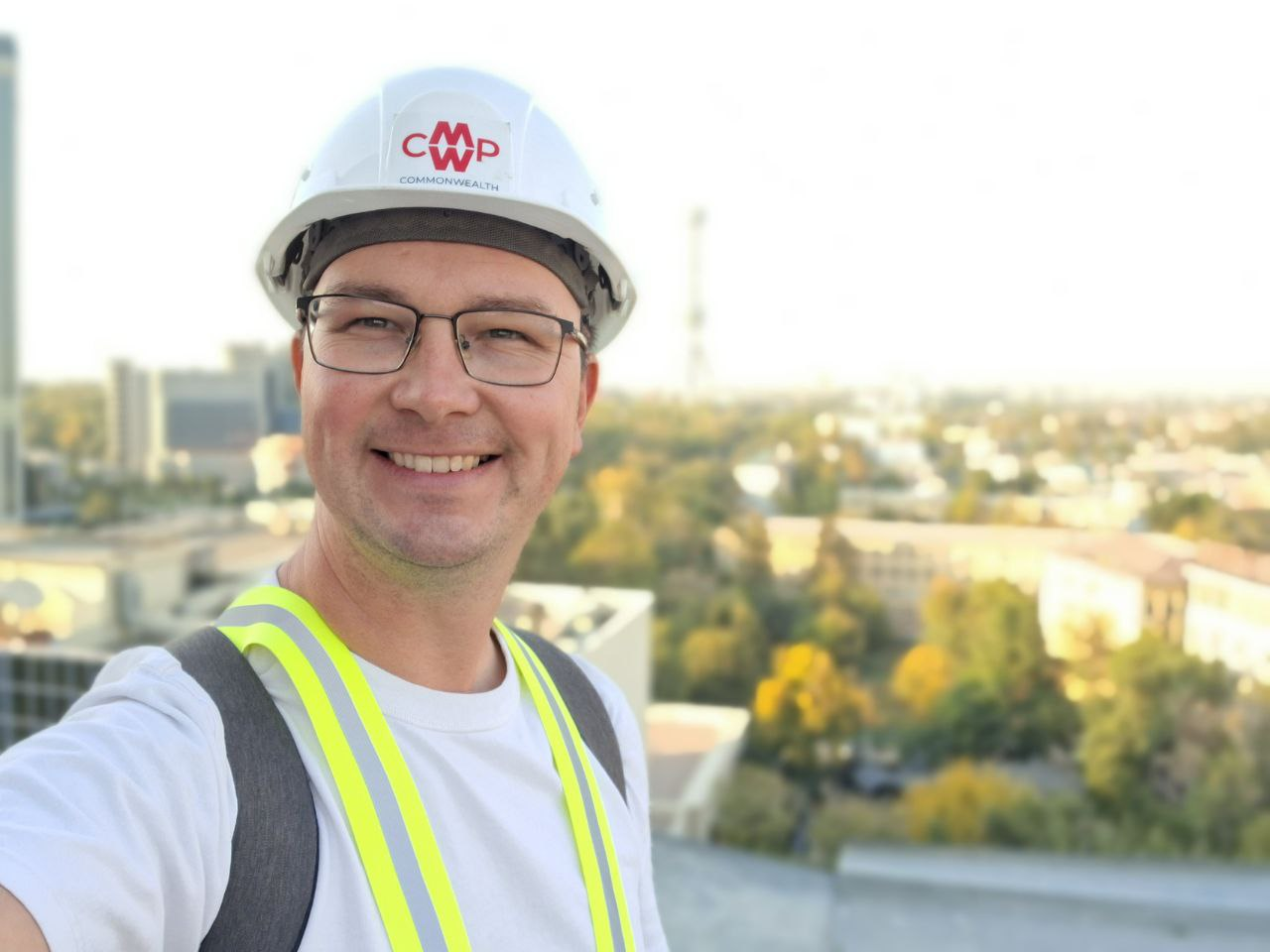
Valentin Kruglikov, Chief Engineer CMWP Uzbekistan
Source: Kursiv.uz