Spot, together with the General Director of Commonwealth Partnership, Denis Sokolov, looks back at the year for the residential and commercial real estate markets: how retail companies and international brands are stimulating demand for warehouse space, how prices have changed, and what to expect from real estate next year.
Spot continues its year-end reviews across various sectors. This time, together with Denis Sokolov, General Director of Commonwealth Partnership (CMWP), we will examine what happened in the residential and commercial real estate market – the trends observed, how prices have changed, and what to expect in 2024.
Market Situation
According to Denis Sokolov, 2023 was a calm year for the real estate market. Almost all indicators showed acceleration: construction rates and the announcement of new projects.
"As a result, we can talk about quantitative growth, but unfortunately, it is too early to talk about qualitative growth, although the classification of office buildings by the American Chamber of Commerce (AmCham Uzbekistan) is an important milestone for the Tashkent market," notes the head of CMWP.
He states that real estate typically follows the economy. If the country's economy grows, this sector leads the development; stagnation and economic decline often lead to a market crisis. In 2023, macroeconomic indicators were decent: GDP growth at 5.5%, inflation around 10%. The Som also lost about 10% against the dollar. The Central Bank's key rate remained at 14%.
"Regarding real estate, 2023 saw the beginning of market consolidation, where rental rates and prices are gradually converging. There are fewer extremely expensive offers on the market. Buyers and tenants have become more discerning; they are no longer willing to acquire property at any price – they are gradually improving their qualifications as investors. Just a couple of years ago, real estate (offices, retail spaces) was bought with the expectation of selling at a higher price. This approach worked in conditions of scarcity. For some projects, we saw a twofold increase in prices from the start of sales. However, high construction rates have led to many investors now fixing profits by selling assets bought two years ago, which competes with the primary market. Those who do not wish to sell their premises are trying to generate rental income. This approach allows the owner to assess the property more adequately based on its investment attractiveness. When buyers and sellers start looking at the market similarly, it becomes easier to find common ground regarding price and transaction terms," believes the expert.
Residential Real Estate
According to data from the Center for Economic Research and Reforms, in November, the average price for secondary housing in Tashkent was $1.1 thousand per sq. m. Over the year, it increased by almost 23%. Across the republic, the average housing cost increased by 18.2%.
Meanwhile, rent in the capital has fallen by 9.2% since the beginning of the year to $9.3 per sq. m. Prices have been declining since last year, following a sharp spike amid the relocation of Russians to Uzbekistan.
"Tashkent is actively building housing, and new projects are being launched. Fundamental demand is fueled by urbanization, internal migration, and the fact that apartments remain an irreplaceable investment asset," notes Denis Sokolov.
As early as 2022, the Central Bank noted that a "price bubble" could form in the Tashkent housing market. The Central Bank explained that the "bubble" expands because the population expects further housing price increases, which further boosts demand. In turn, continuous price growth will attract investors seeking profits from this trend, leading to even greater price increases regardless of changes in fundamental factors.
This year, individuals without official income were also able to obtain mortgages. This further stimulated demand for real estate.
Despite the construction of new properties, their cost continues to increase. The Central Bank attributes this to a combination of public investment demand and the limited availability of alternative savings instruments.
The fact that constant demand for housing persists, and the supply volume cannot be formed at a high level, indicates that in the future, an increasing imbalance between supply and demand in the real estate market will likely further inflate the price bubble, believe analysts at the Central Bank.
At the same time, the head of the regulator, Mamarizo Nurmuratov, noted that a maximum mortgage loan limit of 440 million soums has been set, which reduces the threat of a "bubble."
"We have set a maximum loan limit regardless of the housing cost when issuing a mortgage. The goal is to prevent negative impacts on banks when the 'bubble' bursts. That is, even if a house costs 1 billion soums, the loan provided by a bank in Tashkent will not exceed 440 million soums. This reduces the risk of a 'bubble'," he stated.
S&P also predicted that real estate prices in Uzbekistan will not cause economic imbalances in the near future.
Offices
The office real estate market was characterized by anticipation of key projects entering the Tashkent market. Expectations were only partially met. Market expectations for the commissioning of the Summit Business Center – approximately 30,000 sq. m of usable area (as part of Tashkent City Mall) and several office towers – over 150,000 sq. m of usable area (Tashkent City Lot 6) were not realized, which significantly impacted the introduction of Class A+/A in this year.
"One of the key events was the entry of office spaces in the Trilliant facility into the market. This is important for the market as it represents a significant supply of ready, high-quality spaces in a good location. In fact, this asset sets the upper limit for rental rates today. Buildings entering the market in 2024 will be forced to compete with it. Marketers and agents will face significant work in leasing spaces in a competitive market," notes Sokolov.
According to preliminary calculations by CMWP analysts, the total amount of quality office space in Tashkent by the end of the year was 97,400 sq. m in Class A+/A (compared to 45,000 sq. m at the beginning of the year) and 313,800 sq. m in Class B+/B (at the beginning of the year – 279,500 sq. m). The actual change in office space in 2023 was 117% in Class A+/A and 11% in Class B+/B.
In the second quarter, rental rates for Class A+/A offices were $34.6 per sq. m, and for Class B+/B – $21.8 per sq. m. The vacancy rate for Class B and B+ office spaces was 3.18%, and for Class A and A+ – 17.41%.
Retail
The retail real estate market saw the least growth in area in 2023. Preliminary calculations by the CMWP Research and Analytics Department indicate 500,500 sq. m of space in format shopping centers by the end of 2023.
Only one facility, Tashkent Expo, was commissioned this year, which can only partially be considered a format retail object. Including this facility, the change in total area in the retail real estate market was less than 4%.
The market anticipated the launch and opening of several shopping centers this year – Alfraganus, Tashkent City Mall, and Central Plaza. Construction and finishing works by the developers for the first two facilities are completed, but actual openings have not occurred. Currently, Alfraganus and Tashkent City Mall are in the process of tenant saturation. Central Plaza continues construction and finishing.
"Tashkent's shopping centers desperately need reconceptualization and new retail operators. However, this segment has been 'frozen' awaiting the opening of Tashkent City Mall. This project, significant for Central Asia, could reshape consumer behavior, so it is logical for owners of other shopping centers to postpone reconceptualization to establish their market positioning," believes the head of Commonwealth Partnership.
In his opinion, there is active movement in the sphere of retail spaces on city streets, related to the reformatting of customer flows. So-called retail corridors are being formed – streets with a high concentration of retail outlets and specific specialization. Taras Shevchenko Street is an example of an active restaurant street, where a large number of food service establishments attract visitor traffic and increase the attractiveness and value of real estate. This process has just begun, but it is very important for urban life, as the presence of such active clusters makes city living interesting and diverse. As a result, the value of shops in such clusters can increase manifold, while in areas with low traffic and buyer activity, prices will begin to fall.
Warehouses
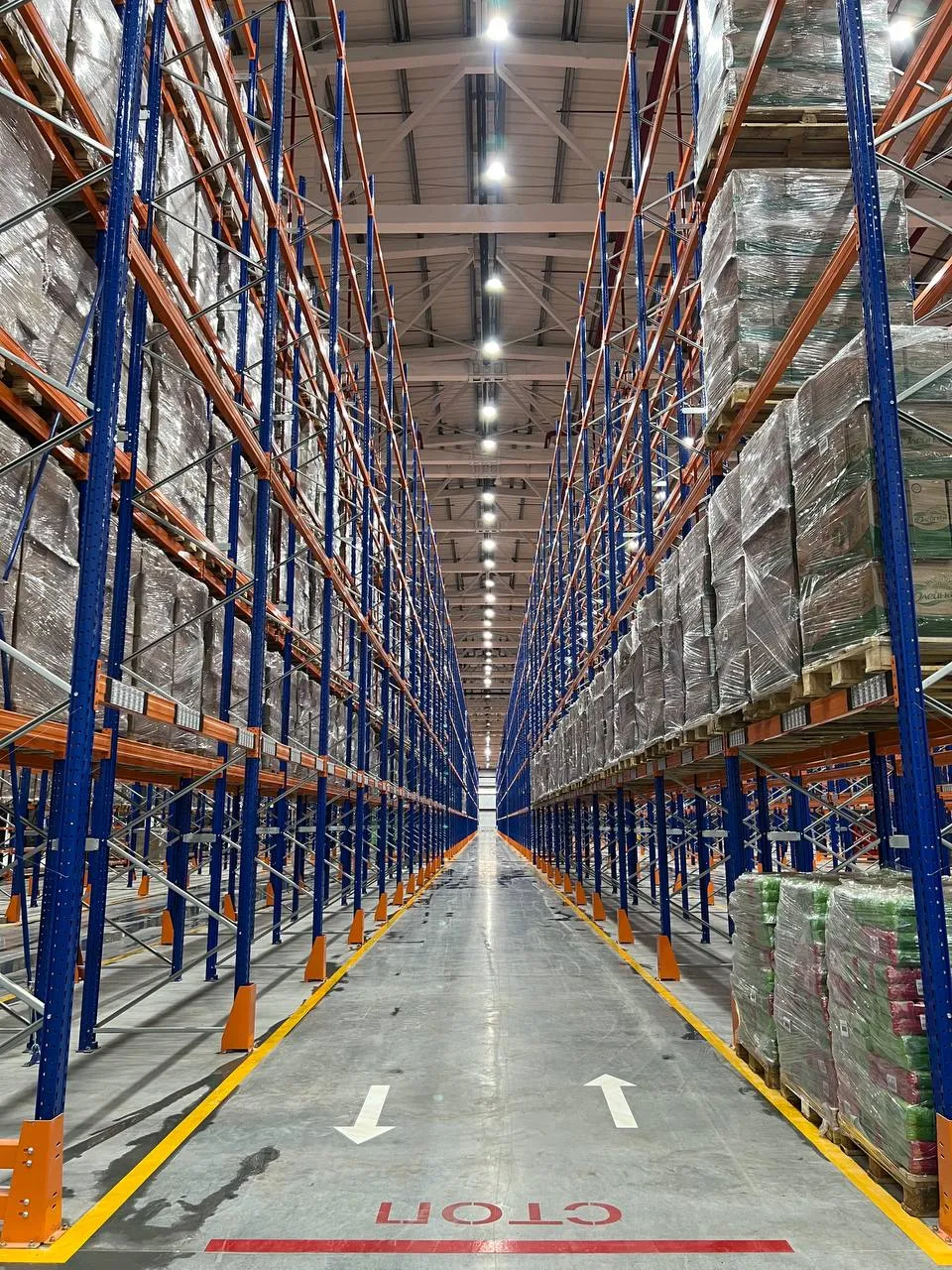
By the end of the year, the total area of warehouse space in Tashkent and its immediate surroundings was 320,000 sq. m, and storage locations (i.e., facilities not intended for professional storage and logistics operations) – 970,000 sq. m.
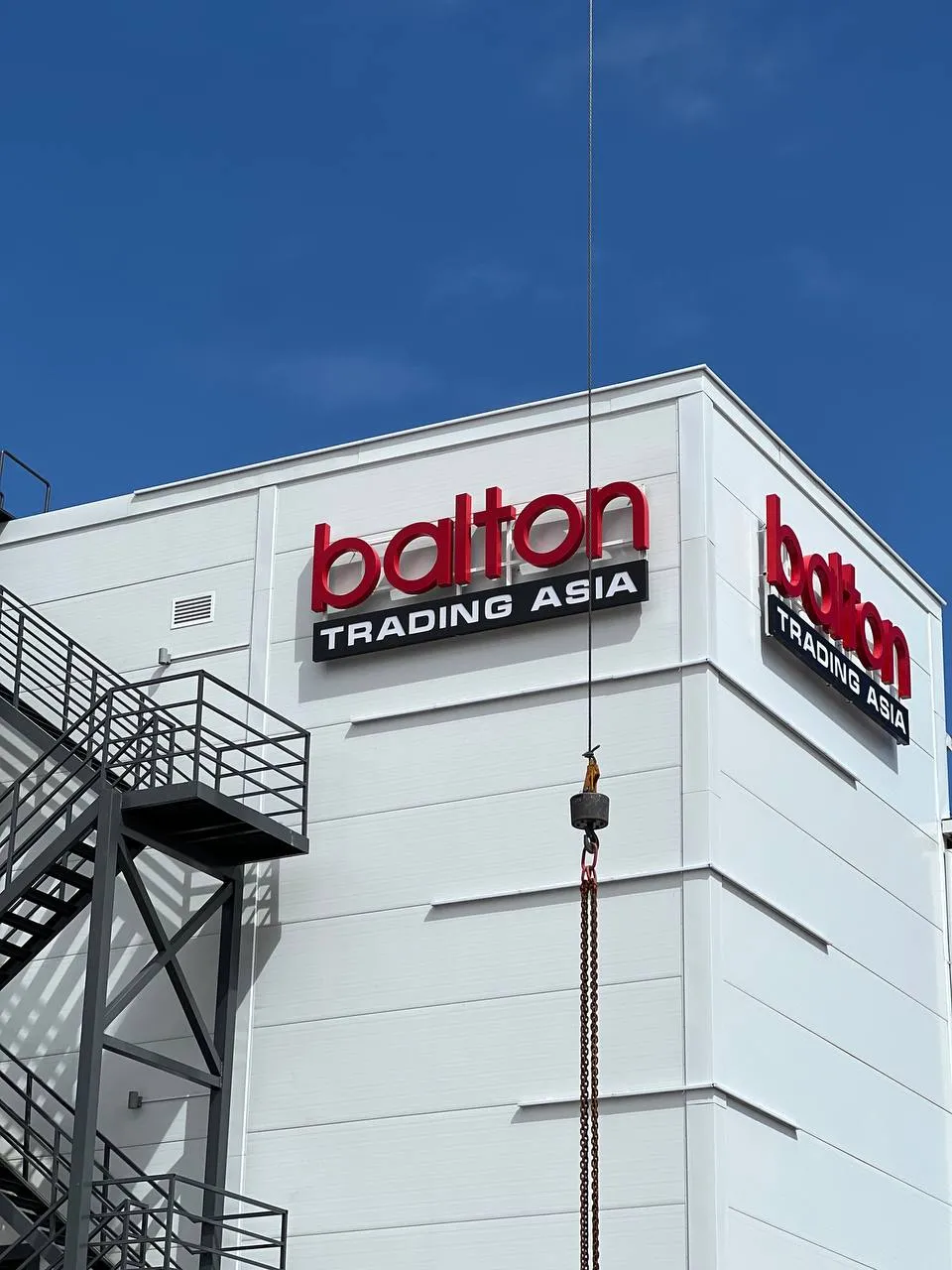
"E-commerce has had an active start in 2023 – the number of pickup points has grown geometrically. Logistics center projects have been announced, and major e-commerce operators are actively entering the market," notes Sokolov.
The largest marketplaces operating in the country – Uzum,

Denis Sokolov,
CEO of the Commonwealth Partnership / Uzbekistan
De-dollarization and withdrawal from cash. ""As the financial system develops, the market will increasingly move away from cash turnover and, accordingly, move from cash dollars "in suitcases" to bank settlements and, naturally, move into the "sum zone." This means that market participants will start using inflation and discount rates when calculating financial models. This creates opportunities for those engaged in business education and contributes to improving financial literacy, as the transition to modeling in the national currency will not only increase the stability of the financial system but also allow businesses to suffer fewer losses due to currency fluctuations.
Announcement of outstanding architectural projects. Developers will have to move to a new level of competition, including by attracting outstanding international architects. The city desperately needs 1–2 landmark projects that could become the face of the capital.
Activation of the secondary market, creation of listing systems for real estate sales. Today, investors who want to lock in profits face difficulties in selling their properties, as there are not enough organizations and services on the market that provide high‑quality intermediary services.
Boom in e‑commerce and logistics services. The acceleration of e‑commerce growth and the shift of sales from traditional markets to marketplaces, as well as the intensification of competition among major players, will stimulate the growth of logistics.
The transformation of the urban environment will involve changes to traffic flow algorithms, the streamlining of parking in the city, and the development of public transport.
Development of the New Tashkent project. Although full‑scale construction in New Tashkent is still a long way off, developers, architects, and consultants will nevertheless begin to take into account the prospects for the development of new territories when designing projects within the city limits, including.
We do not expect any major changes in pricing and rental rates in 2024, but we believe that the number of transactions involving the leasing and sale of commercial premises will increase significantly. Overall, the market is in for a very interesting and productive year.
Source: Spot.uz