Sergey Ryabokobylko, Managing Partner and CEO of Commonwealth Partnership, discussed how the sustainability trend has impacted real estate, what makes Uzbekistan attractive from an investment perspective, and the contribution of completed real estate transactions to GDP.
Economic turbulence and global unpredictability have also affected Uzbekistan's housing market. Real estate prices in the capital are growing at a pace comparable to global trends.
The entire construction industry is forced to adapt to economic realities and buyer demands. Consequently, approaches to modern housing and commercial real estate—class segmentation, focus on sustainability, format, and price—have changed recently.
Construction in the capital is in full swing. Today, everyone can find a suitable option, from small studios to penthouses with rooftop playgrounds and sports areas.
Uzbekistan's capital market is currently one of the most promising in the world. A shift is occurring not only in residential units but also in commercial real estate, which is moving away from traditional offices towards flexible formats.
Sergey Ryabokobylko, Managing Partner and CEO of Commonwealth Partnership, spoke about the real estate market situation, current trends, future forecasts, and why both individuals and companies no longer need just "square meters" but rather an "atmosphere."
Keeping Pace with Global Trends
Global markets are currently experiencing stress due to inflation, the state of the sector, and rising lending costs.
Consequently, this significantly impacts project attractiveness, creating complexities on one hand and opening new opportunities on the other.
The real estate market today is characterized by relatively low returns and long-term planning.
A modern development project is a complex process that takes 10 years or more, requiring thorough preparation and stable fiscal, financial, and legislative institutions.
It is impossible to plan anything 10 years ahead if the country's legislation changes annually.
The Eco-Trend. Entrepreneurs worldwide have recently become seriously interested in the ESG (Environmental, Social, and Governance) phenomenon.
While real estate was once the embodiment of capitalism, the trend is now heading in a completely different direction.
Applying ESG standards to real estate demonstrates a growing awareness that property can have a significant social impact, either through the restoration of affordable and social housing or through investments in new "green" buildings.
 I believe that ESG will increasingly influence real estate valuation and investment year by year.
Therefore, constructing eco-sustainable buildings using environmentally friendly materials and intelligent technologies not only benefits the environment but also enhances investment returns.
For instance, such an approach helps reduce the carbon footprint of cities and mitigate the effects of emissions.
Thus, the sustainability trend influences which projects will remain in an investor's portfolio, which will be developed, and which should be divested today.
Furthermore, construction according to international environmental standards is not exclusive to European markets; it is also noticeable in Uzbekistan.
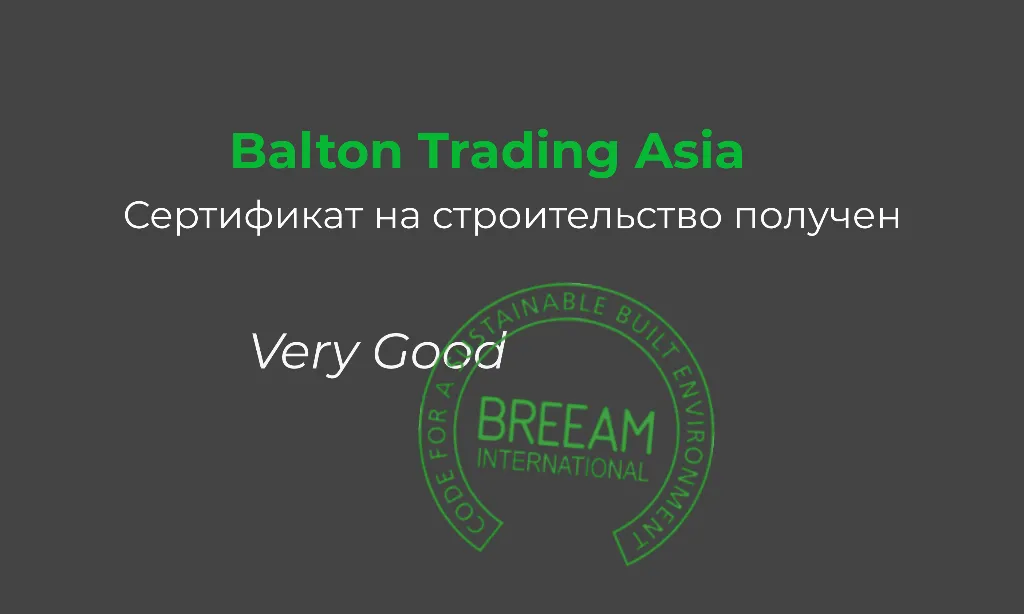
For example, one of our key investors here chose us to help their logistics complex obtain international environmental certification.
Therefore, Uzbekistan is not lagging behind global trends.
A Promising Market
Uzbekistan's capital market is currently one of the most promising in the world, not solely from an investment attractiveness standpoint.
Here, structures and institutional mechanisms that have taken other countries 10 years or more to establish can be created in a shorter timeframe. The country has demonstrated accelerated development, largely due to its openness and readiness for cooperation from both entrepreneurs and the country's leadership.
Therefore, in our view, the main trend in the country today is the concept of transforming real estate from mere square meters into an investment asset.
A building comes to life after construction is completed, at a stage when investors and developers pay the least attention to the project and are mostly focused on their next ventures.
In developed countries, the contribution of the completed real estate operations segment to GDP can reach up to 15%.
Here, this figure is still within the margin of error. However, it is crucial to understand that this refers to the contribution of operations with completed real estate, not construction itself, to GDP.
I believe that a shift in the approach to real estate investments and viewing property as a long-term asset can drive accelerated growth for the country's economy.
It is understandable that many here have not yet embraced this. We observed a similar situation in several other former Soviet republics. In those countries, any investment or asset had to pay for itself within one to two years, and long-term investments were not even considered.
In my opinion, this stems from the inability to plan long-term and the lack of stability and consistency in legislation.
Consequently, this compelled people to seek quick and easy profits, which are insignificant compared to the long-term effects of real estate investments.
Unfortunately, there are no short-term money schemes in this sphere, as projects take three to seven years from conception to completion. Only after commissioning do they become operational and create added value.
Accordingly, the path Uzbekistan is taking, like other countries, is a normal process for developing markets. However, Uzbekistan, as I mentioned, has the opportunity to traverse this path more quickly.
Moreover, looking at certain market players and their projects that have emerged in a relatively short period, one can say that there is a competitive and healthy environment that allows for real estate investment and even bold planning for at least the short term.
Real Estate Boom
There has recently been a construction boom, likely compensating for what was not built in previous years.
Frankly, such urban transformations often elicit negative public reactions and rejection—dust, noise—all that disrupts normal life and comfort.
In this regard, only a modern approach to planning and urbanism can ensure a balance of interests for all parties. Construction is inevitable; how it is carried out is what matters.
 Many lament the density of construction, stating that private spaces are being lost.
However, there is the concept of "good density," where a city balances the volume of residential and commercial construction with public spaces—alleys, parks, gardens, and playgrounds, with a primary focus on pedestrians.
In such a scenario, few developers consider the surrounding area or the long-term significance of their project for the city's development.
Moreover, it is commonly believed that a morally outdated building can be demolished and replaced with something new. However, this is a barbaric and cruel treatment of the city.
A Place for Collective Work
In Europe, over half of GDP is generated in office spaces.
This is analogous to a car: the majority of its cost is not in materials but in engineering solutions, innovations, technologies, marketing, and other intangible components.
The same applies to offices, as in modern production companies, people are mostly not on the production floor but in offices. This is where additional and added value is created.
Therefore, for a city, offices are a kind of "human capital factory," generating primary income for families and households.
Both individuals and companies no longer need just "square meters"; they need an atmosphere. An office is not just a place to write a few emails and have coffee. It is a space for collective work, thinking, and the collision of ideas.
Indeed, it is more accurate today to speak not of an "office" but a "place for collective work," as this encapsulates the unique function of office labor.
However, the most important thing to remember today is that, regardless of its name, any type of office must have a sustainable business model, quality service, and a safe working environment.
European cities are currently witnessing a shift towards flexible office spaces. This trend is irreversible, as it did not revert even during the pandemic.
Most flexible offices are emerging from traditional ones. This doesn't require changing lighting or doors; it involves rethinking the internal space organization to offer employees choices.
Our company itself transitioned from a conventional business center office to a flexible, open-plan space. In Tashkent, we operate in a co-working space.
Essentially, office space is utilized at best only 50% of the time, and conference rooms are used only 20-30% of the year.

Investor Sentiment
Real estate remains a crucial asset in institutional investors' portfolios. However, the perception of asset attractiveness is beginning to change.
Location is becoming secondary; market conditions and the timing of a transaction are becoming more important.
There is an active transformation in real estate investment formats—student housing, senior living, and more.
In other words, what was never considered a "glamorous" project, and what investors previously overlooked, is suddenly becoming a necessary part of the portfolio.
I believe this format is quite promising for Tashkent, considering the rising rental and property prices, high urbanization rates, and the predominantly young population in the country.
Forecasts
Recently, we have observed a significant increase in rental market prices and per-square-meter costs. Interest in integrated territorial development projects is noticeably growing.
We believe the market will stabilize in these areas in 2023, but a multi-fold price increase of 200-300% in specific segments is not ruled out.
This will not pose a threat to the economy, as the market is still underdeveloped and small. The number of projects capable of delivering high quality in their segment is limited.
Challenges and Hurdles. Undoubtedly, all developers and investors are monitoring the key interest rate, which has surged and has not yet decreased. Currently, it outpaces inflation. A correction in this regard will make financing in soums more attractive.
We hope that with economic development and GDP growth, households will have additional resources to afford larger loans at lower rates.
Source: Spot.uz